Off
View Post
MVC August Workgroups Highlight Preop Testing Reduction with RITE-Size and QI to Improve Outcomes for ICH Stroke Patients

MVC August Workgroups Highlight Preop Testing Reduction with RITE-Size and QI to Improve Outcomes for ICH Stroke Patients

In August, the Michigan Value Collaborative (MVC) hosted two virtual workgroup presentations, a preoperative testing workgroup focused on Henry Ford Health Genesys’ preoperative testing reduction initiative and a health in action workgroup presentation by DMC Detroit Receiving Hospital on their intracranial hemorrhage quality initiative. The MVC Coordinating Center hosts workgroup presentations once or twice per month, covering a variety of topics including cardiac rehab, post-discharge follow-up, sepsis, rural health, preoperative testing, and health in action.

Preoperative Testing Workgroup: Henry Ford Health Genesys

During this month's preoperative testing workgroup, Henry Ford Health’s (HFH) Brooke Wagner, RN, BSN, Clinical Quality Facilitator II, SCQR, and Megan Wadowski, RN, BSN, Principal Quality Consultant, shared how HFH Genesys achieved significant improvement in reducing unnecessary preoperative testing prior to low-risk surgical procedures (e.g., inguinal hernia, lumpectomy, and cholecystectomy) by participating in the RITE-Size initiative.

HFH Genesys became involved in RITE-Size following outreach from the Michigan Surgical Quality Collaborative (MSQC), who indicated the HFH Genesys was eligible to participate in the RITE-Size initiative. HFH Genesys saw this as an opportunity for improvement and met with the RITE-size team for an initial site visit and kick-off meeting.

RITE-Size Coaching & Implementation Strategies

After initial discussions, the RITE-size and HFH Genesys teams identified two areas for improvement: 1) ordering practices and 2) provider workflows. The desired outcome/goal was to reduce unnecessary preoperative testing to better align with evidence-based (EBP) system-wide practices at HFH.

Wagner shared that HFH Genesys was able to pull together a multi-disciplinary team to meet with the RITE-size team, including clinical quality staff, the surgeon champion, chief of staff, and nurse manager for preadmission testing. Their team met and reviewed organizational data and workflows, discussed barriers, and considered ideas for long-term sustainability. By sharing perspectives from providers, nursing, anesthesia, and leadership, they were able to develop action plans and strategies to support continued improvement.

As the HFH Genesys team participated in regular coaching sessions throughout the project with the RITE-size team, they were able to increase awareness and give team members the opportunity to ask questions. Throughout the project, they were able to track fallouts, review trends, and maintain continuous process improvement.

Leveraging MVC Data

Part of the process of educating and increasing awareness among team members included sharing data from a MVC custom report completed earlier this year on HFH Genesys’ historical preoperative testing rates from 2023 – 2025 (partial data). Through this report, they discovered that despite changing from open surgery to robotic hernia surgery in early 2024, historical preoperative testing practices persisted (Figure 1). The team was able to develop an action plan and education for surgical providers where they presented evidence-based best practices for preoperative testing in relation to robotic hernia repairs and quickly saw a reduction in testing rates by the second half of the year.

Figure 1. Preoperative Testing Rates for Outpatient Laparoscopic Cholecystectomy, Inguinal Hernia Repair, and Lumpectomy in the 30 Days Prior to Admission at Henry Ford Genesys, 2023-2025 by Half-Year, All Payers

Line chart compares preoperative testing rates for Your Hospital and MVC GACH All across 2023 Q1–2 through 2025 Q1–2*. Blue hospital rates fluctuate from 36.8% to 30.6%, peaking at 39.7% in 2024 Q1–2, while orange comparison rates steadily decline from 39.0% to 34.6%.

*Reflects BCBSM/BCN claims through June 30, 2025, and Medicare FFS through March 31, 2025. Michigan Medicaid was provided through Dec. 31, 2024.

In addition to the clinical metrics HFH Genesys utilized, the custom report MVC provided included data for non-medical drivers of health that gave greater insight into their patient populations being treated for these low-risk procedures. Data tables helped HFH Genesys identify a large portion of patients undergoing low-risk hernia repair as patients living in zip codes with multiple barriers to care.

Identifying these barriers allowed HFH Genesys to restructure and simplify discharge instructions to better meet the needs of the patient population by incorporating patient-centered language and clear guidance on setting up follow-up appointments.

Process Change Efforts

By reviewing MVC and MSQC data together, HFH Genesys was able to identify multiple opportunities for improvement. After evaluating existing preoperative testing order sets, they found the original set was outdated and no longer aligned with evidence-based practice recommendations. By updating the electronic medical record (EMR) system, HFH Genesys was able to make a comprehensive update to the order set and preoperative testing policy for their teams.

This updated policy was then implemented across the organization and shared through trainings for providers and associated staff on appropriate testing guidelines and the revised preoperative testing workflows. To maintain continuous improvement through this process, the HFH Genesys team also established ongoing communication with surgical teams to reinforce adherence to the updated processes, which included orientations for new nursing or physician staff. Sharing the policy during the orientation allowed new staff to ask questions, and for the site to provide in-depth explanations on the effectiveness of the preoperative testing policy.

Barriers, Opportunities, and Next Steps

Wagner shared that though they have accomplished improvements in their preoperative testing process, there are barriers the organization continues to experience that may impact 100% adherence to the new policy. Those barriers range from unpredictable staffing fluctuations, administrative associate turnover, and variability in practice patterns among providers.

Despite ongoing setbacks, HFH Genesys looks forward to the future and opportunities ahead. By implementing Epic EMR in November of this year, they will provide enhanced clinical decision support for staff with the updated preoperative testing process coded into the EMR while creating standardized order sets for providers to easily use. These updates will further support adherence to the policy and provide a strong foundation for continued improvement. HFH Genesys will continue to provide communication and collaboration opportunities with providers and leadership on the “why” of the preoperative testing process change. This will be supported by ongoing monitoring and feedback processes to ensure sustained improvement through the Epic EMR implementation in November.

MVC Preoperative Testing Workgroup: Aug. 11, 2026

Health in Action Workgroup: DMC Detroit Receiving Hospital

During the August health in action workgroup, DMC Detroit Receiving Hospital’s Maryam Hakemi-King, MSN, AGNP, Stroke Program Lead Nurse Practitioner, presented on DMC Detroit Receiving Hospital’s participation in the American Heart Association’s (AHA) Intracranial Hemorrhage (ICH) Initiative, which focuses on advancing care and improving outcomes for patients with ICH.

ICH Stroke Facts & AHA ICH Initiative

Hakemi-King led the presentation by defining essential facts about hemorrhagic strokes to lay a foundation for the “why” of DMC Detroit Receiving’s participation, including:

  1. Hemorrhagic strokes account for approximately 13% of all strokes; but despite being less common, they are responsible for more than 40% of stroke-related deaths
  2. ICH is associated with a high early mortality rate of 30 – 40%
  3. Recent studies have shown a nationwide increase in ICH incidence among young and middle-aged adults
  4. There has been significant improvement in the care of ischemic stroke over the years, but similar progress has not been seen in the care of ICH patients.

As a result, AHA is actively partnering with 15 sites across the nation to participate in a two-year initiative to improve care and outcomes for ICH patients. The chosen sites are led by physician champions of the initiative and are focused on implementing national models of effective ICH care, including using procedures such as minimally invasive parafascicular surgery (MIPS) and aligning with ICH metrics and measures through AHA’s stroke focused Get with the Guidelines (GWTG) program. DMC teams are working to identify successful models of care through process mapping activities and continuously evaluating ongoing quality improvement initiatives. Participating sites like DMC are focusing on areas such as:

  • ICH patient triage process
  • Patient selection criteria for MIPS procedure
  • Surgical timing and post-operative care
  • Staff training and education
  • Evaluating outcomes

Sites discuss and review strengths and barriers to care while investigating all opportunities within each of these domains.

DMC Detroit Receiving Hospital Stroke Program

DMC Detroit Receiving Hospital has a comprehensive stroke center and program, which has seen a 43% increase in ICH admission cases from 2023 to 2025. The stroke center offers comprehensive, around-the-clock care supported by neurointensivists, specially trained neurosurgeons, and close collaboration with the ED, neurology, Neuro ICU, and neurosurgery teams. Its coordinated approach includes a dedicated stroke activation and paging system, a designated PACU holding area, 24/7 minimally invasive brain interventions for eligible patients, and AI-assisted identification of intracerebral hemorrhage (ICH). Structured documentation, quality audits, and monthly case reviews further support continuous improvement and high-quality patient care.

DMC Detroit Receiving worked to integrate the ICH methodology into their program by implementing specific metrics and measures, conducting a more in-depth analysis of patients receiving surgical intervention and their level of functioning at discharge, development of specific ICH consult note documentation and code ICH activation process, and continuing research while developing a new framework for ICH management (Figure 2).

Figure 2. DMC Detroit Receiving Hospital’s Integration of the ICH Initiative into Clinical Practice

Infographic outlines integration of ICH Initiative into clinical practice at Detroit Receiving Hospital. Four color-coded stages cover ICH-specific metrics and measures, more in-depth patient analysis, documentation and implementation of specific Code ICH Activation process, and research for new framework for ICH management.

ICH Initiative

Hakemi-King expressed how incorporating the AHA ICH initiative’s metrics and measures are an important focus for DMC Detroit Receiving. As they work to align with the national initiative, several ICH metrics and measures are being tracked, such as timing of patients being taken from arrival to the ED to imaging, taking the patient’s blood pressure in less than 120 minutes of arrival at the ED, and ensuring the ICH severity score is completed less than 6 hours before an intervention (Figure 3).

Figure 3. ICH Metrics and Measures

Slide showing ICH Metrics and Measures: door to Imaging in less than 25 minutes, door to anticoagulant reversal in less than 60 minutes, door to first blood pressure medication administration in less than 60 minutes, door to blood pressure goal less than 120 minutes, door to ICH severity score less than 6 hours or prior to intervention

These established care timeframes help ensure patients receive appropriate care on time. By structuring the patient’s care pathway from imaging to medication administration and blood pressure management, the stroke team prepares the patient to have a more successful discharge process.

The ICH quality initiatives currently in progress include tracking patient door to neuro intensive care unit (NICU) bed timing; tracking and identifying ICH presenting symptoms, which can be different than typical stroke symptoms; introducing early physical, occupational, and speech therapy interventions within the first 24 hours of admission (patient progress reported at monthly meeting); and completing a Pre-Morbid Modified Rankin Score (mRS) on patients at admission, discharge, and 90-days post-admission.

DMC Detroit Receiving Hospital is also in the process of implementing their Code ICH protocol. Code ICH is like other traditional Code Stroke processes but is specifically developed to focus on ICH patient care and is activated upon positive identification of a brain bleed on imaging. According to Hakemi-King, the introduction of the new protocol at their site has so far seen an increased rate of identification of ICH patients upon admission, a significant reduction in time from door to NICU bed, and improvement in care coordination and efficiency for these patients. Hakemi-King also shared that their site has just submitted their abstract on this research project to AHA for the 2027 International Stroke Conference and will be able to highlight more specific outcomes once the research timeframe has concluded.

Next Steps

Overall, Hakemi-King said the initiative is strengthening care for patients at Detroit Receiving with intracerebral hemorrhage (ICH) across the continuum—from improving ED workflows through Code ICH to conducting 90-day follow-up calls that assess functional outcomes and recovery interventions. The program focuses specifically on patients presenting through the ED, with strong frontline engagement supported by hands-on leadership, staff education, and regular review of performance gaps. Although exact patient volumes are not yet available, recent data suggest a relatively young population with a roughly even male-to-female distribution. For smaller hospitals preparing patients for transfer to a comprehensive stroke program, Hakemi-King emphasized two critical priorities: promptly managing systolic blood pressure to the recommended range and, when possible, initiating anticoagulant reversal before transfer.

MVC Health in Action Workgroup: Aug. 27, 2026

MVC welcomes workgroup presenters from across Michigan to share their expertise, success stories, initiatives, and solution-focused ideas with MVC members. Please reach out to the Coordinating Center by email if you are interested in being a workgroup presenter or submit a presentation proposal here.

Off
View Post
Building Confidence in Claims Data: MVC’s Site Coordinator Education Program Continues to Grow

Building Confidence in Claims Data: MVC’s Site Coordinator Education Program Continues to Grow

Helping hospitals turn claims data into meaningful quality improvement (QI) action is central to Michigan Value Collaborative’s (MVC) mission. While MVC has long provided members with access to robust claims-based data and reporting resources, member feedback consistently identified a common challenge: many site coordinators and quality leaders wanted additional support in understanding how to interpret claims data and apply it to their organization’s improvement initiatives.

In response, the MVC Coordinating Center launched a series of site coordinator education modules. This structured learning experience was designed to strengthen claims data literacy while building participants’ confidence in using MVC resources to support local QI efforts. The program combines foundational education with practical application, peer collaboration, and individualized support to create a flexible learning experience that can be tailored to each participants’ needs.

After program registration began in January 2026, interest quickly exceeded expectations leading to the creation of three phased cohorts of quality leaders. To date, 40 site coordinators have enrolled in the program, representing 33 hospitals and 12 health systems, reflecting the growing demand for education focused on translating data into action.

A Four-Module Learning Experience

MVC’s site coordinator education program consists of four live, virtual modules that can be completed sequentially or independently depending on each participant’s experience and learning goals.

Module 1: Understanding MVC Fundamentals

The first module introduces participants to foundational knowledge about MVC including the collaborative’s mission, vision, data resources, P4P program, and engagement opportunities. Participants are additionally encouraged to develop a plan for how to meet yearly engagement goals based on preferred activities.

Module 2: Navigating MVC Data Resources

The second module reviews common claims data terminology and definitions, strengths and limitations of claims data, and explores how claims data can be used to supplement clinical data analyses to support QI efforts. Participants also learn to navigate the MVC registry, interpret push reports and identify meaningful performance measures.

Module 3: Applying MVC Resources to Quality Improvement

The third module examines opportunities to make connections between QI efforts and other aspects of MVC’s programming including fellow CQI collaborations and the MVC Component of the BCBSM P4P Program. This module aims to shift from understanding claims data to identifying applications of MVC resources to QI.

Module 4: Best Practice Sharing and Stakeholder Engagement

The fourth and final module focuses on translating the knowledge gained from the previous modules into the appropriate next steps for QI. Participants will have the opportunity to discuss best practices, challenges, and stakeholder communication strategies with fellow quality leaders engaged in similar areas of QI.

This curriculum is built around four complementary components that reinforce learning and encourage real-word application:

  • Foundational Learning: Live virtual sessions introduce key concepts, data resources, and other programmatic materials
  • Applied Case Studies: Independent exercises using hospital-specific reports help guide data interpretation and identify QI opportunities
  • Individual Coaching: One-on-one support from MVC Coordinating Center offers on-demand assistance with report interpretation and the development of customized reference tools
  • Peer Learning Forums: Integrated opportunities to connect with colleagues across Michigan to share experiences, discuss challenges, and exchange successful strategies

Together, these components create a learning environment that extends beyond traditional education by helping participants immediately apply knowledge to their own QI work.

As an example, following Module 2, participants are encouraged to complete a worksheet designed to apply concepts from the 1:1 session to their own organization’s data. Completed worksheets demonstrate strong engagement with the education framework, with participants identifying meaningful opportunities to improve quality of care in a variety of focus areas including readmissions, care transitions, cardiac rehabilitation utilization, and drivers of higher episode spending. Rather than jumping directly to solutions, participants thoughtfully used MVC claims data to generate hypotheses, identify additional clinical and operational information needed, and defined realistic next steps for QI.

A common theme across submissions is recognition that claims data can serve as a starting point for inquiry but must be combined with other data resources to drive QI strategies. Participants frequently identified the need to pair MVC data registry findings with health record data, chart reviews, frontline staff feedback, and internal quality dashboards to better understand underlying drivers. Participants also outlined practical next steps such as engaging multidisciplinary teams, validating findings locally, and integrating MVC data monitoring into existing QI initiatives. These outcomes demonstrate the program’s goal of helping site coordinators translate data insights into meaningful action.

Participant Feedback and Preliminary Outcomes

Evaluation is embedded throughout the education program to ensure the curriculum continues to meet participants’ needs. While the program is in its first year, initial feedback suggests it is already helping participants build confidence in using MVC resources. Following the completion of Module 1, site coordinators have reported an average confidence rating of 4.5 out of 5 in their ability to “describe MVC’s data resources and engagement opportunities.” These early results indicate that the program is successfully establishing a strong foundation for participants as they progress towards applying claims data to QI initiatives within their organizations.

Additionally, participants have highlighted the program’s impact on building both knowledge and confidence:

"Thank you so much for the time and education! I think this is exactly what I need as a new Quality Manager and Site Coordinator. Looking forward to the next module!"

"It was a great learning experience and I'm looking forward to learning more about how we can use this data for process improvement."

"This was a foundational review. I feel very confident with the foundational principles now. I look forward to becoming more comfortable with the claims data and using this data more confidently to improve our performance."

Looking Ahead

MVC’s education modules were designed to bridge the gap between data availability and practical application by combining several complimentary learning strategies. By equipping site coordinators with the knowledge and tools to not only interpret but also apply MVC data to QI efforts, the program aims to strengthen hospitals’ ability to identify improvement opportunities, support evidence-informed decision-making, and advance value-based care across Michigan.

As the program continues to expand, the MVC Coordinating Center is planning to scale up the program by training additional Coordinating Center team members to lead these sessions. Using participant feedback from post-module and post-program surveys, MVC will also continue to refine the curriculum to best meet the needs of site coordinators.

MVC looks forward to welcoming future cohorts of hospital quality leaders to the education program. If interested in joining the next cohort beginning in October 2026, please complete the registration form here.

Off
View Post
MVC Finalizes Summary Evaluation of PY 24-25 P4P Cycle

MVC Finalizes Summary Evaluation of PY 24-25 P4P Cycle

This year, the Michigan Value Collaborative (MVC) completed scoring and evaluation for Program Year (PY) 2025 of the MVC Component of the Blue Cross Blue Shield of Michigan (BCBSM) Pay-for-Performance (P4P) Program. This concluded a two-year program cycle encompassing the program methodologies and conditions utilized in PYs 2024 and 2025. MVC recently completed an evaluation of these two program years, which focused on hospital performance on average 30-day risk-adjusted, price-standardized total episode payments for the included conditions as well as utilization rates for the included value metrics across both program years.

The PY 2024-2025 program cycle utilized episode claims from 2021 through 2024. PY 2024 scoring compared performance year data from 2023 against baseline year data from 2021. PY 2025 scoring compared performance year data from 2024 against baseline year data from 2022.

Hospitals chose one episode spending condition from six available options for the PY 2024-2025 program cycle, including chronic obstructive pulmonary disease (COPD), colectomy (non-cancer), congestive heart failure (CHF), coronary artery bypass graft (CABG), joint replacement (hip and knee), and pneumonia. Among these six P4P conditions, joint replacement was the most selected condition (31), and pneumonia was the least frequently selected (6). Colectomy was not selected by any hospital.

Trends in average price-standardized episode payments showed a consistent decrease over the years for joint replacement. Both COPD and CABG showed relatively consistent trend in payments and had the highest payments in 2022 as seen in Figure 1. Both PYs saw an average decrease in payments in both CABG and joint replacement. Joint replacement was the largest contributor to the cost savings in this cycle with a decrease of $3 million dollars in PY 2024 and $1.9 million dollars in PY 2025.

Figure 1. Average Price-Standardized Episode Payment Trends for P4P Conditions (2020-2024)

Line chart showing 30-day total episode payments from 2020 to 2024 for five conditions: CABG, Pneumonia, CHF, COPD, and Joint. CABG payments remain highest around $50,000 with slight fluctuations, while other conditions show gradual increases between $14,000 and $18,000.

MVC further assessed the components contributing to total episode spending, and determined all conditions except COPD showed a decrease in spending in at least one episode component (i.e., index payment, professional services, post-discharge care, readmissions) across both PYs (Figures 2-3). Joint replacement showed decreased spending across all components in PY 2025 and across all components except readmissions in PY 2024. Similarly, all conditions demonstrated a reduction in spending for at least one post-discharge component in both PYs. Home health spending decreased across all conditions while inpatient rehabilitation spending increased for most conditions in both PYs. Emergency department spending also decreased for most conditions across both PYs.

Figure 2. Change in Average Price-Standardized Episode Components, PY 2024

Bar chart comparing 30-day episode component payments across five P4P conditions: CABG, CHF, COPD, Joint Replacement, and Pneumonia. Each condition's total payment is broken down into four color-coded components—Index (dark blue), Professional (orange), Post-Discharge (bright blue), and Readmissions (gray)—highlighting negative payment for CABG and Joint Replacement and positive payments for other conditions.

Figure 3. Change in Average Price-Standardized Episode Components, PY 2025

Bar chart comparing 30-day episode component payments across five P4P conditions: CABG, CHF, COPD, Joint Replacement, and Pneumonia. Payment components include Index (dark blue), Professional (orange), Post-Discharge (bright blue), and Readmissions (gray), showing negative total payments for CABG and Joint Replacement, and highest positive payment for Pneumonia.

In addition to selecting an episode spending condition, hospitals also selected one of seven available value metrics for the PY 2024-2025 program cycle. This included 7-day follow-up after CHF, 7-day follow-up after pneumonia, 14-day follow-up after COPD, 30-day inpatient readmissions after sepsis, 90-day cardiac rehab after CABG, 90-day cardiac rehab after PCI, and preoperative testing before low-risk surgeries (i.e., inguinal hernia repair, cholecystectomy, and lumpectomy). The 7-day follow-up after CHF metric (23) was the most frequently selected value metric followed by 90-day cardiac rehab after PCI (17). In contrast, 90-day cardiac rehab after CABG and 30-day inpatient readmissions after sepsis were the least frequently selected (5) value metrics.

Among the high-value metrics, hospitals that selected 14-day follow-up after COPD and 90-day cardiac rehab after PCI increased their utilization rate by 1.4% and 3.1%, respectively, from 2021 to 2023 (Table 1). In PY 2025, the utilization of 90-day cardiac rehab after CABG increased by 3.6% in 2024 compared to 2022 (Table 2). Among the low-value metrics, sepsis readmission rates decreased by 0.5% in PY 2024 and 7.0% in PY 2025. Preoperative testing rates decreased by 5% from 2022 to 2024 in PY 2025.

Table 1. Average Utilization Changes for P4P Value Metrics in PY 2024

Table displaying P4P value metrics with average utilization percentages for 2021 and 2023, alongside utilization change rates. Metrics include follow-up rates after CHF, pneumonia, COPD, cardiac rehab after CABG and PCI, inpatient readmissions after sepsis, and preoperative testing, with notable increases in 14-day COPD follow-up (1.4%) and 90-day cardiac rehab after PCI (3.1%).

Table 2. Average Utilization Changes for P4P Value Metrics in PY 2025

Table comparing average utilization rates for various healthcare metrics in 2022 and 2024, highlighting percentage changes. Metrics include follow-up periods after conditions like CHF, pneumonia, COPD, cardiac rehab after CABG and PCI, inpatient readmissions after sepsis, and preoperative testing, with notable increases in 90-day cardiac rehab after CABG and decreases in inpatient readmissions and preoperative testing.

Overall, the average total points earned remained relatively stable between PY 2024 (6.6) and PY 2025 (6.7), as shown in Figure 4. Average episode spending points decreased from 2.4 to 2.2, while average value metric points increased from 2.4 to 2.6, and average engagement points increased from 1.7 to 1.8 from PY 24 to PY 25.

Figure 4. Average Points Earned by Scoring Components in PYs 2024-2025

Bar chart comparing scores for PY 24 and PY 25 across four categories: Episode Spending Points, Value Metrics, Engagement Points, and Final Score. PY 25 slightly outperforms PY 24 in Value Metrics, Engagement Points, and Final Score, with both years scoring similarly in Episode Spending Points.

The distribution of total points earned by participating hospitals in PY 2024 and PY 2025 are shown in Figures 5 and 6, respectively. Approximately 15% of hospitals scored the maximum score of 10 points in PY 2024 and this proportion decreased to 10% in PY 2025.

Figure 5. Distribution of Hospital Total Points Scored for PY 2024

Scatter plot showing PY24 final scores of MVC hospitals participating in PY24-25 program, with scores ranging from 0 to 10. Data points are marked in blue, with mean score 6.6 in orange and median score 6.1 in gray, highlighting most hospitals scoring at or above median and mean.

Figure 6. Distribution of Hospital Total Points Scored for PY 2025

Scatter plot showing final PY 25 scores for MVC hospitals participating in PY 24-25 program, with scores ranging from 2 to 10. Plot includes orange line for mean score (6.7), gray line for median score (6.0), and dark blue dots representing individual hospital scores, highlighting most hospitals scoring at or above median.

Additional details are contained in the full report. Please contact the Coordinating Center for more details on the report or for any questions regarding the PY 2024-2025 cycle.

Off
View Post
Share Your Success Story at MVC’s Fall 2026 Collaborative-Wide Meeting

Share Your Success Story at MVC’s Fall 2026 Collaborative-Wide Meeting

The Michigan Value Collaborative (MVC) is now accepting presentation proposals for its fall 2026 collaborative-wide meeting, taking place Fri., Oct. 9, at the VistaTech Center in Livonia, Michigan.

Each collaborative-wide meeting provides an opportunity for members to learn directly from one another by sharing innovative approaches, practical lessons learned, and successful quality improvement strategies. MVC is seeking presentations that highlight quality improvement initiatives informed by MVC offerings, such as push reports, custom reports, registry data, or insights gained through participation in MVC events and peer learning opportunities.

Potential presentation topics include how your organization used MVC offerings to:

  • Benchmark performance against peer hospitals
  • Establish quality improvement goals and target metrics
  • Build leadership support for improvement initiatives
  • Identify variation in care across hospitals or communities
  • Measure the progress or impact of interventions
  • Inform the development of new workflows, programs, or best practices

We also welcome proposals showcasing other ways your organization has leveraged data to support quality improvement planning, implementation, or evaluation.

Partners may submit MVC's online presentation proposal form by Tues., July 28, to share their proposed topic. After proposals are reviewed, the MVC Coordinating Center will contact selected presenters to discuss their topic and provide guidance throughout the presentation development process.

As an added benefit, hospitals participating in the MVC Component of the BCBSM Pay-for-Performance (P4P) Program may earn 0.5 engagement points toward Program Year 2026 for presenting at an MVC event.

We hope you'll consider sharing your team's work and helping inspire improvement efforts across the MVC collaborative.

Presentation proposal deadline: Tues., July 28

Please reach out to the MVC Coordinating Center with any questions.

Off
View Post
May Workgroup Highlights Building and Sustaining a Systemwide Sepsis Team

May Workgroup Highlights Building and Sustaining a Systemwide Sepsis Team

In May, the Michigan Value Collaborative (MVC) hosted a virtual sepsis workgroup featuring a presentation on the evolution of Michigan Medicine’s enterprise-wide sepsis initiative and the lessons learned while building a sustainable, multidisciplinary sepsis program. The MVC Coordinating Center hosts workgroup presentations once or twice per month, covering a variety of topics including post-discharge follow-up, sepsis, cardiac rehabilitation, rural health, preoperative testing, and health in action.

Sepsis Workgroup – Michigan Medicine

Sepsis remains one of the leading drivers of mortality across healthcare systems, including Michigan Medicine. When sepsis can be treated, this not only reduces patient mortality, but also length of stay, readmissions, morbidities, and overall health of patients, so it comes as no surprise that Michigan Medicine recognized the need to make modifications to their current approach to sepsis management. Presenter Tami Garcia, MSN, RN, Sepsis Team Manager at Michigan Medicine explained how they began by moving away from siloed approaches to care. Early efforts focused on understanding existing workflows across Michigan Medicine’s enterprise and identifying inconsistencies in sepsis care. This included the recognition, escalation, and treatment of sepsis across adult, maternal, emergency and inpatient care settings.

While the team had a foundation set up with dashboards and procedural guides for screening, there had never been a team dedicated to ensuring consistent sepsis care across the system. Rather than immediately deploy new tools or mandates, this new team prioritized “Gemba walking” to meet providers where they work to better understand barriers, workflows, and frontline realities. As Garcia explained, “we need to build changes with our staff, not to our staff.” Garcia credited this approach to helping the sepsis team identify opportunities to standardize care while also building trust with bedside clinicians.

Building Trust as a Quality Improvement Strategy

A major theme throughout Garcia’s presentation was the importance of developing trust in quality improvement work. She emphasized that credibility and relationships became foundational to the success of this sepsis initiative. In addition to Gemba walking, the team focused on:

  • Maintaining a visible unit presence
  • Responding quickly to staff concerns
  • Closing communication loops
  • Listening to frontline staff frustrations
  • Incorporating clinician feedback into workflow design

Figure 1. Michigan Medicine’s Sepsis Team Standard Work and Governance Framework

Flowchart diagram illustrating sepsis coordinator rounding process and workflow reliability in a healthcare setting. It includes labeled boxes for standard work steps (Recognize, Huddle/escalate, Execute sepsis bundle), clear ownership by program team and units, and feedback loops showing stages of communication (What we heard, What changed, What we measured).

One notable outcome of this approach involved the reduction in excessive Epic alerts that historically contributed to alarm fatigue among nursing staff. Rather than dismissing the concerns, the team partnered with clinicians and informatics specialists to reduce unnecessary alerts and improve usability. This example is related to just one of the four main lessons learned by the sepsis team:

  1. Trust-building is a deliverable
  2. Tools must fit a workflow, otherwise they become workarounds
  3. Sustainment requires ownership
  4. Reducing burden (e.g., alarms) is improvement, not compromise

Standardizing Sepsis Recognition and Response

Following this period of learning and trust-building, the Michigan Medicine sepsis team began implementing a series of targeted interventions designed to improve reliability and timeliness of care.

Some key initiatives included:

  • Re-establishing multidisciplinary sepsis huddles in the adult emergency department
  • Enhancing Epic tools and workflows (adult, pediatric, etc.)
  • Launching maternal sepsis screening and nurse-initiated patient care orders
  • Implementing non-invasive fluid responsiveness technology in ICUs
  • Establishing nurse sepsis champions and physician ambassador programs
  • Creating neonatal sepsis response workflows in the NICU

Figure 2. Michigan Medicine’s ER Workflow and Sepsis Huddle Process Map

Flowchart illustrating ER workflow and Sepsis Huddle process for Michigan Medicine, detailing steps from initial sepsis screen to reassessment and monitoring. Key elements include color-coded boxes for tasks like RN paging for Sepsis Huddle, provider actions, and code sepsis activation, with timelines and criteria for bundle completion and reassessment.

Garcia highlighted the adult emergency department sepsis huddles as one of the team’s most impactful initiatives. The huddles bring nurses and providers together immediately after a positive sepsis screen to rapidly determine next steps and initiate treatment plans. This converts concern into coordinated action and normalizes escalation. Combined with streamlined order workflows and decision-support tools, timeliness of care and collaboration between disciplines have been improved.

Measurable Improvements in Sepsis Outcomes

Measurable improvements in both process and outcome measures since the formation of the dedicated sepsis team in 2022 were then reviewed. The reported improvements included:

  • Adult emergency department SEP-1 bundle compliance increased from approximately 50% in 2022 to almost 80% in 2026
  • Severe sepsis and septic shock mortality rates decreased from 26.2% in 2022 to 20.1% in 2025
  • Maternal sepsis screening rates exceeded 90% for OB triage and 78% for inpatient screens
  • Pediatric sepsis alert burden was reduced significantly from over 35,000 OPA’s in 2022 to just under 20,000 in 2025
  • Reduced the frequency of first antibiotic administration in neonatal populations at >120 minutes from over 40% to under 15% between the beginning and end of 2025

Garcia repeatedly credited frontline teams for these successes, emphasizing that sustained improvement depended on empowering all team members, especially clinicians, rather than relying solely on centralized oversight.

Expanding Frontline Ownership Through Sepsis Champions

One of the most promising developments discussed was the creation of the RN Sepsis Champion Program. Nurses serving as sepsis champions support local reliability, providing peer-to-peer education, reinforcing workflows, and helping to disseminate best practices within their units. Garcia described how this program has expanded rapidly across the Michigan Medicine organization and has already demonstrated improvements to bundle compliance and mortality outcomes in pilot units. Champions are especially important given high turnover rates and shifting operational pressures in healthcare. With monthly meetings, shared educational resources, and ongoing collaboration, champions help maintain momentum and create local ownership of sepsis improvement efforts.

Looking ahead, Michigan Medicine plans to sustain workflows, expand sepsis huddles, and strengthen support for sepsis champions and physician ambassadors. Garcia closed the presentation by reinforcing that successful sepsis improvement, or perhaps any quality improvement initiative, depends on partnership, humility, and continuous learning. As Garcia explained, “We really want to continue to partner with our teams to make sure they understand why we’re here, that they trust we’re here for the best of everybody -them and their patients.”

MVC Sepsis Workgroup: May 21, 2026

MVC welcomes presenters from across Michigan to share their expertise, success stories, initiatives, and solution-focused ideas with MVC members through various best-practice sharing platforms. Please reach out to us by email if you are interested in being a workgroup presenter or submit an online presentation proposal.

Off
View Post
October Workgroup Highlights Food FARMacy Program for Chronic Disease Management

October Workgroup Highlights Food FARMacy Program for Chronic Disease Management

In October, MVC’s health in action workgroup featured Hurley Medical Center’s Amanda Escalera-Torres, RD, Director and Nutrition Specialist for their Food FARMacy program. The presentation shared how the program helps support patients with chronic diseases by providing healthy food and nutrition education. The MVC Coordinating Center hosts workgroup presentations twice per month, covering a variety of topics including post-discharge follow-up, sepsis, cardiac rehabilitation, rural health, preoperative testing, and health in action. 

Health in Action Workgroup: Hurley Medical Center 

Hurley Medical Center’s Food FARMacy initiative was founded in 2017 to address Genesee County’s higher food insecurity rate of 13% (compared to the state average of 11%). It was funded by several grants and the Hurley Foundation to provide support services such as grocery access and nutrition education for Hurley patients. According to a 2024 MVC member survey, programs such as this are becoming more common in health systems across the state to address non-medical drivers of health such as food insecurity, economic and housing instability, and other factors. Food insecurity and being unable to access nutritious food has been linked to an increased risk of chronic diseases such as diabetes, cardiovascular disease, and certain types of cancer (Odoms-Young, 2024).  

Patient Eligibility and Enrollment 

Escalera-Torres shared that patients are eligible to enroll in the Hurley Food FARMacy program if they are both food-insecure and have a chronic diet-related condition (Figure 1). Patients are referred to the program through avenues such as Hurley Medical Center inpatient or outpatient services, community health clinics, or primary care clinics throughout Genesee County. Once enrolled, patients receive monthly grocery support, meal kits, and nutrition classes for up to six months (Figure 2). 

Figure 1.

vertical bar chart of predicted disease prevalence for adults in low-income households 2019-2022, source: USDA Economic Research Service

Figure 2.

Food FARMacy nutrition education classes and materials

Food Distribution Process 

Each month, Hurley’s Food FARMacy program provides 300–400 patients with food access and education. Groceries are acquired through established contracts with local farmers and vendors and include locally sourced fresh fruits, vegetables, grains, meat, and more.  

Program and Participant Success 

Hurley Food FARMacy expanded their food resources by increasing their farmer and vendor contracts to 11 this past year. This provides more accessibility for food and helps boost the local Michigan economy. The program also established 12 referral partnerships across Genesee County’s community health centers and primary care providers, allowing the program to serve over 5,500 individuals in the last year. Among the population served, only 5% of those who completed six or more Food FARMacy visits in the last year had an inpatient admission (Figure 3).  

Figure 3.

Food FARMacy program and participant successes

Reducing Barriers 

Following the presentation, Escalera-Torres answered questions about the ways the program has been able to reduce barriers to access, including how food supply was managed during the off-season and how they accommodated patients with transportation limitations. Escalera-Torres explained that the program did experience some difficulty acquiring fresh produce during the off-season but recently partnered with Great Lakes Farm to Freezer to ensure availability of a robust selection of nutritious foods year-round. To address patient transportation barriers, Hurley Food FARMacy partnered with Door Dash earlier in the year for a trial run of delivering food to participants. The program was well received but ended due to lack of continued funding. Patients with transportation barriers are now able to assign a proxy to pick up their groceries, which has helped reduce accessibility barriers.  

The Food FARMacy program will continue to adapt and serve Genesee County patients providing quality food and improving nutritional awareness for chronic diet-related illnesses.  

MVC's cardiac rehabilitation workgroup for October was rescheduled for February 2026. View the complete 2026 workgroup calendar here. 

MVC welcomes workgroup presenters from across Michigan to share their expertise, success stories, initiatives, and solution-focused ideas with MVC members. Please reach out to us by email if you are interested in being a workgroup presenter or submit a presentation proposal here. 

Off
View Post
MVC 2025 Fall Collaborative-Wide Meeting Summary – Adapting Together in 2025 and Beyond: High-value Care for All in a Changing Landscape

MVC 2025 Fall Collaborative-Wide Meeting Summary – Adapting Together in 2025 and Beyond: High-value Care for All in a Changing Landscape

The Michigan Value Collaborative (MVC) held its fall 2025 collaborative-wide meeting on Friday, Oct. 10, in Livonia. A total of 91 attendees representing 64 hospitals, three physician organizations, and 13 healthcare systems from across the state of Michigan came together to share strategies for mitigating the impact of non-medical drivers on health outcomes.

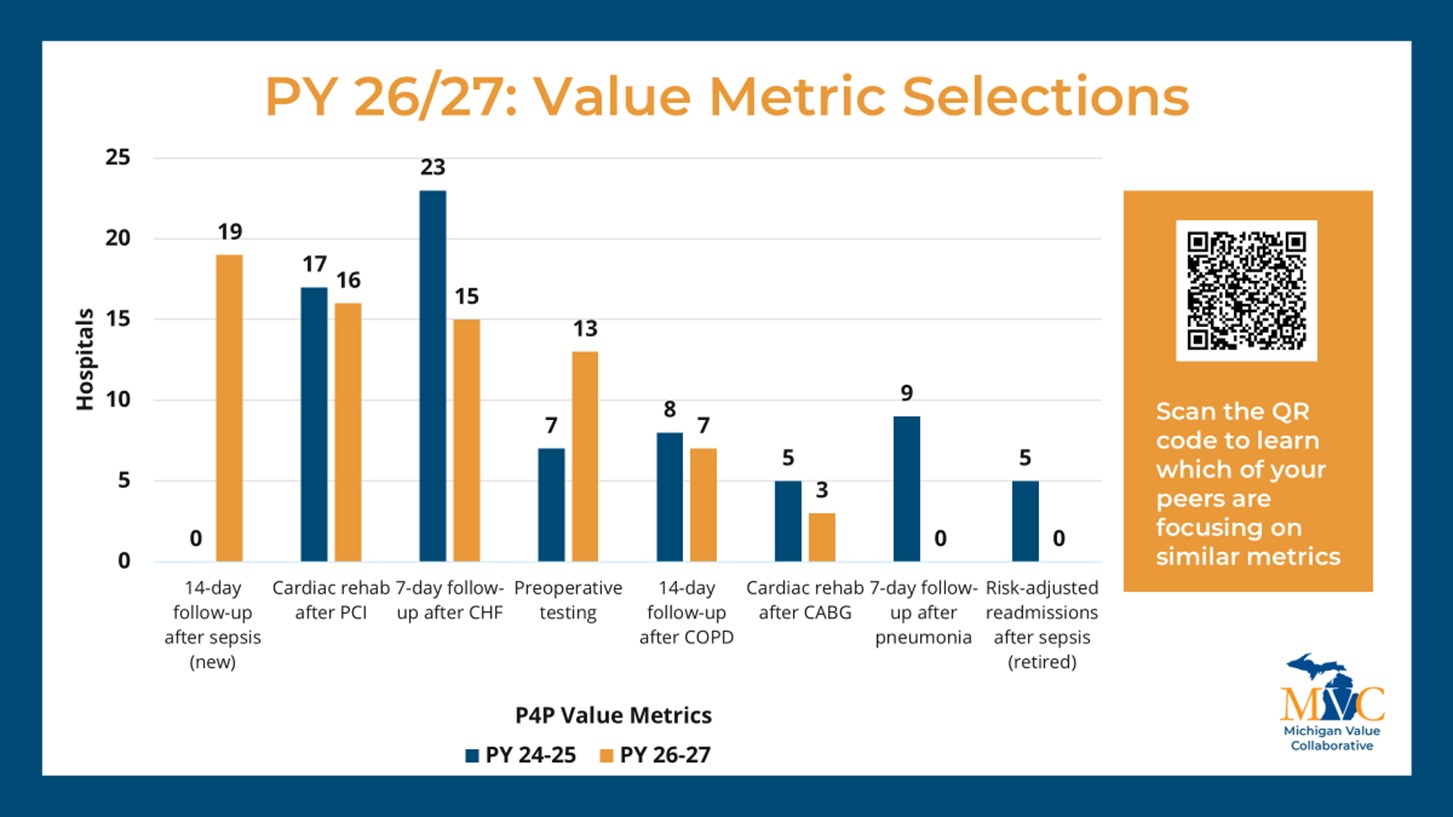
MVC Director Mark Bradshaw, MSc, kicked off Friday’s meeting with updates on the MVC Coordinating Center [See slides]. He introduced MVC’s newest team members, Manager of Data Analytics Ian Raxter, MPH, and Project Manager Emily Woltmann, PhD, MSW, as well as announced the promotion of Julia Mantey, MPH, MUP, to Lead Analyst. Bradshaw encouraged sites to register for the 2025 Michigan Cardiac Rehab network (MiCR) fall meeting at Corewell Health Troy Hospital by the Oct. 31 deadline. He also provided an update on Phase II of the RITE-Size preoperative testing trial and recent MVC reporting since MVC’s spring meeting, including refreshed common conditions push reports, the new health outcome variation push report, and the P4P Program Year 2025 mid-year scorecards. Bradshaw provided insights on the content included in the health outcome variation push report and the P4P Program Year 2025 mid-year scorecards before reviewing Program Year (PY) 2026-2027 cycle changes and member selections (Figure 1 and Figure 2).

Figure 1.

vertical bar graph of PY 26/27 episode spending selections for CHF, COPD, PCI, CABG

Figure 2.

vertical bar chart of PY 26/27 value metric selections for seven metrics

Following Bradshaw’s announcement that MVC’s 2026 engagement point menu is now posted on MVC’s P4P webpage, MVC Engagement Manager Jessica Souva, MSN, RN, C-ONQS, highlighted the differences from previous versions of MVC’s engagement point menu. Souva noted that most of the changes to the engagement point menu were adjustments to the point values; however, Souva introduced the addition of a site coordinator education modules offering (Figure 3). Details on these modules will be shared with MVC site coordinators in the coming months via email.

Figure 3.

Site coordinator education modules

The meeting then featured a presentation from the MSHIELD CQI, including Program Manager Julia Weinert, MPH, and Bradley Iott, PhD, MPH, on implications of non-medical drivers of health for quality improvement. Weinert and Iott presented research evidence on the importance of addressing upstream drivers of health outcomes, MSHIELD implementation toolkits, and resources available on the MSHIELD website.

MVC’s keynote presentation was delivered by Gloria Rey, PA-C, MPH, Director of Post-Acute Care for Henry Ford Health/Populance. Her presentation detailed Henry Ford Health’s approach to developing and maintaining strong relationships with post-acute care providers [See slides]. Rey went on to demonstrate how these relationships have improved patient outcomes and cost savings (Figure 4).

Figure 4.

depiction of Henry Ford Health's rehospitalization rates lower for facilities in the post-acute network (PAN) than in the rest of the market

After a networking lunch, MVC Medical Director Hari Nathan, MD, PhD, and MVC Analyst Kushbu Narender Singh, MDS, MPH, delivered an MVC data presentation focused on MVC’s new health outcome variation measure [See slides]. During the presentation, Narender Singh supplemented Dr. Nathan’s explanation of the measure definition (Figure 5), benefits, and rollout timeline with MVC member unblinded data and case scenarios. An introductory video for the health outcome variation measure is available on MVC’s P4P webpage.

Figure 5.

explanation of the health outcome variation measure definition, benefits, and rollout timeline

Attendees spent time in the afternoon in various breakout sessions (Figure 6) learning about strategies from other MVC members to address non-medical drivers of health outcomes [See slides].

Figure 6.

breakout session titles and descriptions

The meeting closed with a reflection of the day spent together and reminders about upcoming meetings and events [See slides].

What are the attendees saying about the meeting?

“I gained a lot of insight and ideas to take back to my organization to review with others.”

“I learned that patients can be in home care and cardiac rehab at the same time which is a game changer for us.”

“Enjoyable to see the multi-faceted approaches that are being used throughout the state's regions for decreasing readmissions.”

“I really enjoyed the breakout sessions and discussions!”

“Loved the ability to talk with other groups and learn from each other. Like the unblinded data, it was more meaningful to what was being discussed.”

If you have questions about any of the topics discussed at MVC’s fall collaborative-wide meeting or are interested in following up for more details, email the MVC Coordinating Center. MVC’s next collaborative-wide meeting will be in person on Fri., May 8, 2026, in Traverse City.

Off
View Post
July Workgroups Highlight Sepsis Compliance Process Improvements and Patient Satisfaction Excellence

July Workgroups Highlight Sepsis Compliance Process Improvements and Patient Satisfaction Excellence

In July, MVC hosted two virtual workgroup presentations – the first, a rural health workgroup focused on how a sepsis compliance initiative was developed and implemented in a critical access hospital setting. The second, a post-discharge follow-up workgroup, presented a small acute care hospital’s journey to patient satisfaction excellence. The MVC Coordinating Center hosts workgroup presentations twice per month, covering a variety of topics including post-discharge follow-up, sepsis, cardiac rehab, rural health, preoperative testing and health in action.

Rural Health Workgroup July 8, 2025

MVC hosted a rural health workgroup with a presentation by Victoria Durr, BSN, RN, Infection Prevention Coordinator from Scheurer Health. The presentation spotlighted a targeted sepsis compliance initiative and shared key strategies, lessons learned, and outcomes tailored to rural healthcare.

Meeting sepsis bundle compliance requirements set by the Centers for Medicare & Medicaid (CMS) is not only vital for reimbursement and regulatory alignment but also directly tied to improved patient mortality outcomes. As Durr explained, rural hospitals face unique challenges to improving sepsis compliance including agency coverage, fewer staff, and limited diagnostic tools.

As a part of her initial assessment of SEP-1 bundle compliance at Scheurer Health, Durr evaluated her staff’s understanding of the sepsis bundle components and found significant knowledge gaps. Other challenges faced by Schurer Health included limited space to admit directly from the emergency department (ED), an inconsistent sepsis census, and changing admitting privileges. These challenges contribute to downstream impacts to sepsis compliance including limited staff awareness and training, changes to lab orders, and transitions in continuity of care.

In July of 2024, Durr began working through each issue one-by-one with the help of department leadership. She outlined specific strategies Scheurer Health has used to improve compliance including:

  1. Implementation of structured training and process changes to standardize sepsis detection across emergency, inpatient, and inpatient care units
  2. Employed a team-based strategy, pairing clinicians and quality improvement leads to reinforce consistent sepsis protocols across inpatient workflows
  3. Leveraged data analytics to identify gaps and monitor compliance in real time

One key proactive tool Durr developed was a step-wise sepsis worksheet for nursing staff to follow in the case of a sepsis patient (see Figure 1, access PDF here). While this form is not required, in those cases when it has been utilized, Durr has found 100% SEP-1 compliance. A similar summary guide was created for physicians to optimize work flows (see PDF here).

Figure 1. Step-Wise Sepsis Worksheet for Nursing

Step-Wise Sepsis Worksheet for Nursing

While Durr notes she has only evaluated data for sepsis cases dating back to July of 2024, she has seen a shift in the areas of SEP-1 non-compliance over time. Analysis revealed that some areas of non-compliance have improved while others have worsened (Figure 2). For example, between Q3 2024 and Q4 2024, non-compliance with antibiotic delivery within a three-hour window significantly declined, while non-compliance with blood cultures being drawn after antibiotic administration increased. However, by Q1 2025 when almost all the strategies outlined above had been implemented, the distribution of SEP-1 non-compliance areas became relatively even. Durr notes that real-time tracking has allowed her team to pinpoint manageable areas of improvement and inform their next steps.

Figure 2. Tracking Areas of SEP-1 Non-Compliance

Tracking Areas of SEP-1 Non-Compliance, Q3 2024 - Q1 2025

In the future, Durr notes Scheurer Health will continue to improve SEP-1 compliance through the implementation of a SEP-1 orientation with newly hired ED and acute care unit nurses, the creation of a standardized nurse handoff report, and continued tracking and team report outs on various metrics including length of stay (LOS), mortality, and sepsis related readmissions.

The workgroup presentation and follow-up discussion not only emphasized specific challenges to improving SEP-1 compliance at a rural health center but also offered solutions. Some of the solutions shared with attendees included recommendations to:

  1. Standardize workflows and checklists to build consistency across units
  2. Create on-demand education modules
  3. Utilize checklists available through the electronic medical records (EMR)
  4. Optimize nursing and physician champions
  5. Use data dashboards for real-time feedback

Rural Health Workgroup July 8, 2025 Recording

Post Discharge Follow Up Workgroup July 24, 2025

MVC’s second workgroup in July featured a presentation by Sara Hagerman BSN, RN, Quality Performance Improvement Specialist for University of Michigan Health-Sparrow at the Clinton, Carson, and Lansing sites. The presentation outlined the various pathways UMH Sparrow Carson has taken to improve their Hospital Consumer Assessment of Healthcare Providers and Systems survey (HCAHPS) scores.

HCAHPS is a tool developed by CMS that measures patient satisfaction. The survey consists of 27 questions that measure different aspects of patient care, including communication with providers, hospital environment, medication management, transitions from hospital to home care, and discharge planning. The survey is administered at various points throughout a patient’s stay, and results are used to compare hospitals on a national level.

Hagerman explains that starting about one year ago, the University of Michigan Health-Sparrow Carson devised a plan to not only improve HCAHPS scores but also to decrease readmissions. To do this, they focused on three primary areas:

  1. Evaluation of social determinates of health (SDoH)
  2. Individualized discharge planning
  3. Care facilitator follow-up

After collecting SDoH metrics in the Electronic Health Record (EHR) for about a year, the team aggregated this data to determine the greatest needs within their patient population. They also specifically looked for corresponding readmission cases to determine if readmissions were contributed to by social needs. Hagerman notes they found food insecurity (3.9%), housing instability (4.2%), and transportation needs (3.9%) to be the most common social factors impacting their community.

Transitioning from a micro to a macro-level, University of Michigan Health-Sparrow Carson senior executives next worked with their community partners to support improved transportation and food assistance resources at the local level. They collaborated with local programs to identify new resources for transportation and food assistance and developed pathways to connect patients directly with these resources prior to discharge.

With these resources in place, the team turned to tailoring individualized patient discharge plans. At UMH Sparrow Carson, nearly 90% of patients discharged have a scheduled follow-up appointment with their primary care provider (PCP) prior to leaving the hospital. And for those without a confirmed PCP, teams set a goal to follow-up within 3-7 days or less. Other components of the individualized discharge plans include:

  • Review of SDoH screening and arrangement for appropriate support services
  • Review of home care instructions, medications, and patient education
  • Post-discharge contact information and call-back within 72 hours

Lastly, Hagerman described the third component of their program triad: care facilitators. Care facilitators are nurses embedded in primary care offices whose primary goal is to identify and support chronically ill patients. They can support care transitions, medication management, patient education, and enhance overall experience. Care facilitators can also enroll patients in UMH Sparrow’s Chronic Care Management Program.

Benefits to enrollment in the Chronic Care Management Program include improved care coordination, increased patient engagement, and reduced hospitalizations. Hagerman points to a readmission rate of 5.9% thus far in 2025, compared to a readmission rate in 2024 of 6.95% as evidence of the positive impact this program has had. However, Hagerman notes there are limitations to the availability of this program to patients due to the cost of patient copays.

When it comes to improving HCAHPS scores, Hagerman noted that perhaps the most important lesson learned in this process has been to ensure team members are aware of the content of HCAHPS surveys. “It’s important to understand what patients will be asked about in order to better address potential issues up front”, noted Hagerman and she’s encouraged her team to become more knowledgeable about the survey. Additionally, engaging an interdisciplinary team and sharing data is especially useful to ensure communication and continued progress. The UMH Sparrow Carson leadership team meets in person at their strategy huddle board every other week to discuss progress and next steps (Figure 3).

Figure 3. Tier 2 Strategy Huddle Board

UMH Sparrow Carson leadership team strategy huddle board

Post Discharge Follow Up Workgroup July 24, 2025 Recording

MVC’s July workgroups specifically highlighted successful quality initiatives at small rural and acute care hospitals in Michigan. Their insights provide a basic understanding of the unique struggles these hospitals face to implement and maintain quality improvement.

MVC welcomes workgroup presenters from across Michigan to share their expertise, successes, initiatives and solution-focused ideas with fellow MVC members. Interested in presenting? Please reach out to us by email or submit a presentation proposal here.

Off
View Post
MVC Thanks Presenters from the First Half of 2025

MVC Thanks Presenters from the First Half of 2025

The MVC Coordinating Center wishes to express our deep appreciation for the thirty-four dedicated professionals who stepped forward to present at MVC’s first and second quarter 2025 virtual workgroups and spring collaborative-wide meeting. We know that members have many demands on their time, competing priorities, and requests from other Collaborative Quality Initiatives (CQIs) and professional organizations to present. By sharing their current data, innovative approaches to persistent challenges, best practices, and lessons learned with MVC members, these 34 presenters made important contributions to our shared goals to improve both access to and the quality of healthcare for all Michigan patients. We celebrate you for contributing in this high-value way. You DO make a difference!

Join the MVC Coordinating Center in giving these folks a well-deserved round of applause!

Cardiac Rehab Workgroup

  • Steven Keteyian, PhD, Director of Cardiac Rehabilitation & Preventive Cardiology, Henry Ford Health
  • Greg Scharf, BS, ACSM-CEP, AACVPR-CCRP, Cardiopulmonary Rehab System Manager, MyMichigan Health

Preoperative Testing Workgroup

  • Jennifer Bennett, MBA, BSN, RN, Lead Quality and Patient Safety Coordinator, Henry Ford Health

Sepsis Workgroup

  • Diane Barton, MSN/MHA, RN, CPHQ, CPPS, Director of Organizational/Clinical Quality, Munson Medical Center
  • Alex Callaway, MBA, CPHQ, CPPS, Director of Quality and Patient Safety, Munson Health System
  • Jennifer Bentley, RN, BSN, Nursing Quality Coordinator, Munson Health System
  • Stephanie Bowen, RN, BSN, Nursing Quality Coordinator, Munson Health System
  • Amy Lorenz, RN, BAS, MPA, Lead QI Specialist II Patient Safety & Quality Department, Covenant Healthcare

Post-Discharge Follow-Up Workgroup

  • Zachary Chapman, MHA, Executive Director, Oaklawn Medical Group
  • Morgan Albright, BSN-RN, Director Case/Care Management Population Health, Oaklawn Hospital

Rural Health Workgroup

  • Mary Wozniak, MPH, CHES, Program Manager, Health Systems Interventions, National Kidney Foundation
  • Jill Oesterle, Director of Provider Solutions, Michigan Center for Rural Health, Michigan State University

Health in Action Workgroup

  • Mary Nowlin, PA-C, Physician Assistant, Michigan Medicine
  • Niki Farquhar, MSE, Project Management Lead for Delays in Care Progression Project Workstream, Michigan Medicine
  • Heidi O’Neill, MS, Project Manager Lead for Continuous Improvement Division of Quality, Michigan Medicine
  • Amanda Biskner, RN, Paramedic, CP-C, Community Paramedicine Coordinator, Tri-Hospital EMS, CP/MIH & File of L.I.F.E. Program

MVC’s spring collaborative-wide meeting:

Roundtables

  • Vani Patterson, MPH, FNAP, Administrative Director, Michigan Center for Interprofessional Education, Michigan Medicine
  • Chloe Miwa, MPH, Administrative Fellow, Michigan Medicine
  • Cyndie Bates, Administrative Services for Access & Referral Management and Mobile Health Clinic, University of Michigan Health-Sparrow
  • Whitney Soule, BSN, Nursing Quality Coordinator, Munson Healthcare Cadillac Hospital
  • Keli K. DeVries, LMSW, Program Manager, MOQC
  • Natalia Simon, MBA, MA, Senior Project Manager, MOQC
  • Ashley Bowen, MS, RDN, CHC, Clinical Nutrition Services Manager, Michigan Medicine
  • Amanda Saint Martin, Hospital Programs Manager, Michigan Center for Rural Health
  • Larrea Young, MDes, Multimedia Design Project Manager, Human-Centered Design Project Manager, HBOM, MCT2D
  • Danielle Fergin, LMSW-C, Manager of Integrated Behavioral Health, MyMichigan Medical Group

Poster Session

  • Leslie Johnson, RN, Clinical Quality Improvement Lead, MIMiND
  • Larrea Young, MDes, Multimedia Design Project Manager, Human-Centered Design Project Manager, HBOM, MCT2D
  • Jennifer Bennett, MBA, BSN, RN, Lead Patient and Safety Coordinator, Ascension Macomb-Oakland, River District, and St. John Hospitals
  • Dawn Johnson, BSN, RN, CCM-R, VP, ACO Performance and Growth, Commonwealth Care Alliance
  • Catie Guarnaccia, MSN, RN, CPEN, Quality Initiatives and Operations Specialist, MEDIC
  • Sam Kesterson, LMSW, Project Coordinator, MEDIC
  • Emma Steppe, MPH, Project Manager, MSHIELD
  • Bradley Lott, PhD, MPH, MS, Content Expert, Health Informatics and Social Care Integration, MSHIELD
  • Keli DeVries, LMSW, Program Manager, MOQC
  • Natalia Simon, MBA, MA, Senior Project Manager, MOQC
Image of thank you note in the palm of two hands joined together

Attendees of workgroups and MVC’s spring collaborative-wide meeting appreciate presenters, too! Here are just a few of the many glowing survey responses MVC has received about presenters and their content in 2025.

Attendee testimonials

As a reminder, past workgroups and virtual networking event recordings can be viewed on MVC’s YouTube channel, and presentation slides and materials from MVC’s spring 2025 collaborative-wide meeting can be viewed here.

Do you have valuable information to share?

Whether you are new to presenting or a seasoned pro, MVC’s Engagement team is here to support you every step of the way. From exploring topic ideas, to preparing information, to managing event logistics, our team makes the experience of presenting easy and comfortable. The P4P points you can earn as a presenter are a great benefit to your organization, too! For more information about presenting, contact the MVC’s Engagement team.

Off
View Post
MVC Welcomes Manager of Data Analytics Ian Raxter, MPH

MVC Welcomes Manager of Data Analytics Ian Raxter, MPH

I am excited to be joining the Michigan Value Collaborative (MVC) team as Manager of Data Analytics! I look forward to working more closely with this great team to improve the quality of care across the state of Michigan.

Since receiving my Master of Public Health in general epidemiology from the University of Michigan in 2012, I have spent my career in the healthcare data world, working in particular with claims data and the CQIs. After graduate school I worked at Blue Cross Blue Shield of Michigan in the Department of Clinical Epidemiology and Biostatistics, working with Value Partnerships to support the Physician Group Incentive Program. After five years there I joined ArborMetrix where I worked as a Data Scientist with several of the CQIs, specifically the Michigan Emergency Department Improvement Collaborative (MEDIC), Michigan Surgical Quality Collaborative (MSQC), Obstetrics Initiative (OBI), and MVC. Following ArborMetrix, I joined Mathematica Policy Research where I worked on a variety of healthcare research projects for federal, state, and other clients.

It was always a pleasure to work with the MVC team during my time at ArborMetrix, and I’m happy to now join the other side of the table to help lead MVC’s analytic team! Please feel free to connect with me at iraxter@med.umich.edu.