The Michigan Value Collaborative (MVC) held its spring 2026 collaborative-wide meeting on Fri., May 8, in Traverse City, Michigan. A total of 84 attendees representing 48 hospitals, 16 multi-hospital systems, and seven physician organizations from throughout the state of Michigan explored strategies for elevating quality across integrated health networks through the lens of system-wide alignment and data-driven improvement.
MVC Director Mark Bradshaw, MSc, began Friday’s meeting with updates on the MVC Coordinating Center and the MVC Component of the BCBSM P4P Program [see slides]. He first introduced attendees to MVC’s newest team members, Senior Faculty Advisor Ryan Howard, MD, MS, and Lead Analyst Megan Heath, PhD. Bradshaw then provided an update on recent MVC reporting since the fall collaborative-wide meeting, including 12 hospital-level custom reports, a push report focused on follow-up utilization, and the P4P Program Year (PY) 2025 final scorecards. It was further announced that MVC’s registry was recently updated with new payer data, including three new months of BCBSM/BCN claims and three new quarters of Medicare FFS claims.
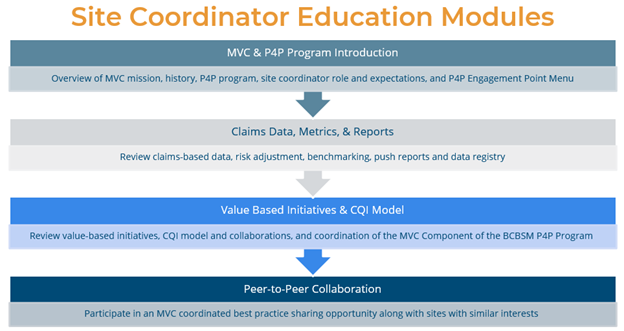
He also provided an update on MVC’s new site coordinator education program. With a total of 31 site coordinators enrolled thus far in 2026, he encouraged those interested in starting in Q4 of 2026 or Q1 of 2027 to join the waitlist for this individualized educational offering [registration link].
Bradshaw next summarized updates on the Michigan Cardiac Rehab network’s (MiCR) efforts to improve cardiac rehabilitation utilization. These include an upcoming MiCR virtual forum featuring a group cardiac rehab demo [registration link], a third round of NewBeat material orders, and Heart-to-Heart patient stories. Additionally, he summarized the status of MiCR’s medication management initiative. If interested in participating in an interview on this topic, please contact MVC via email [email link].
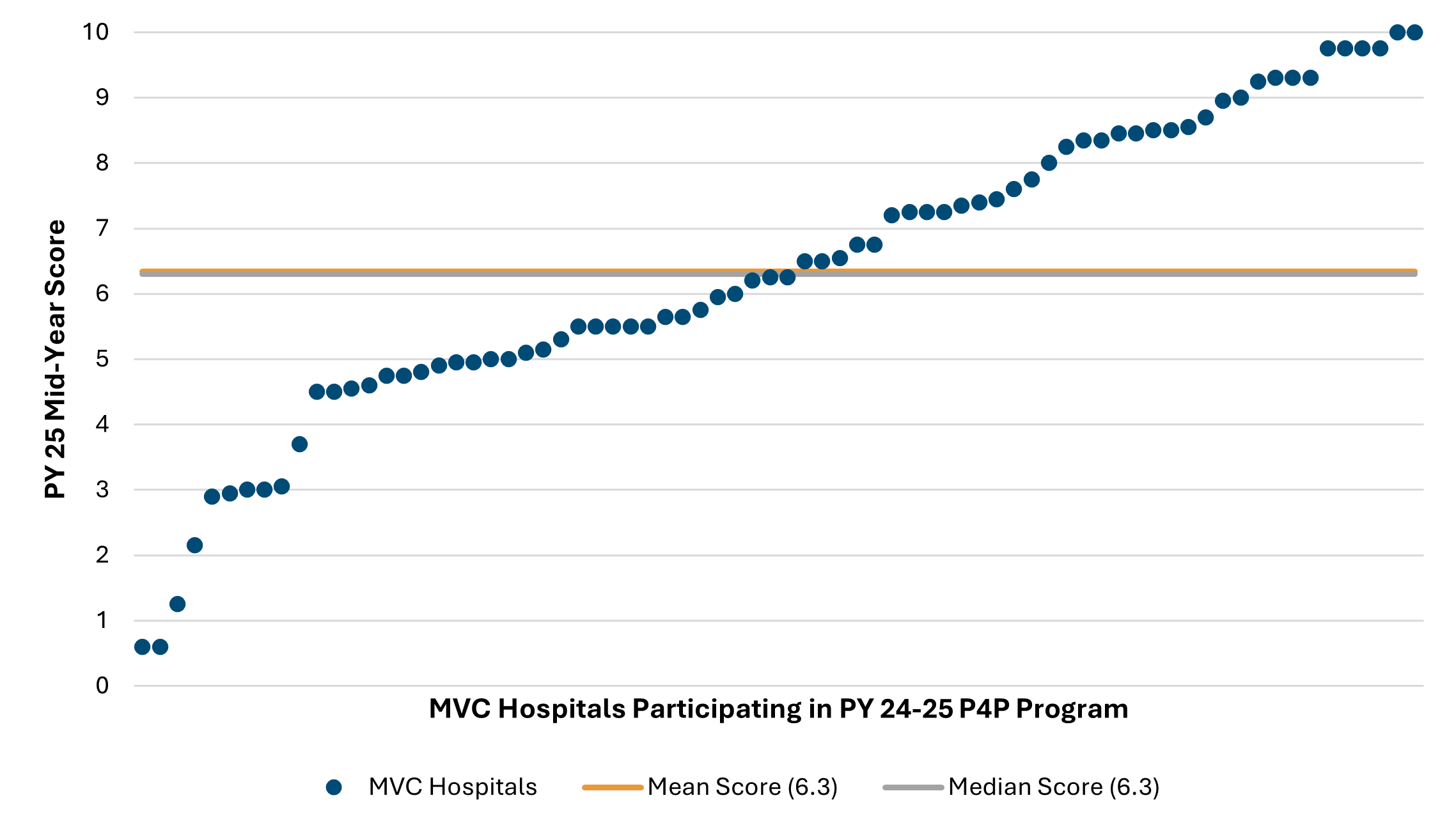
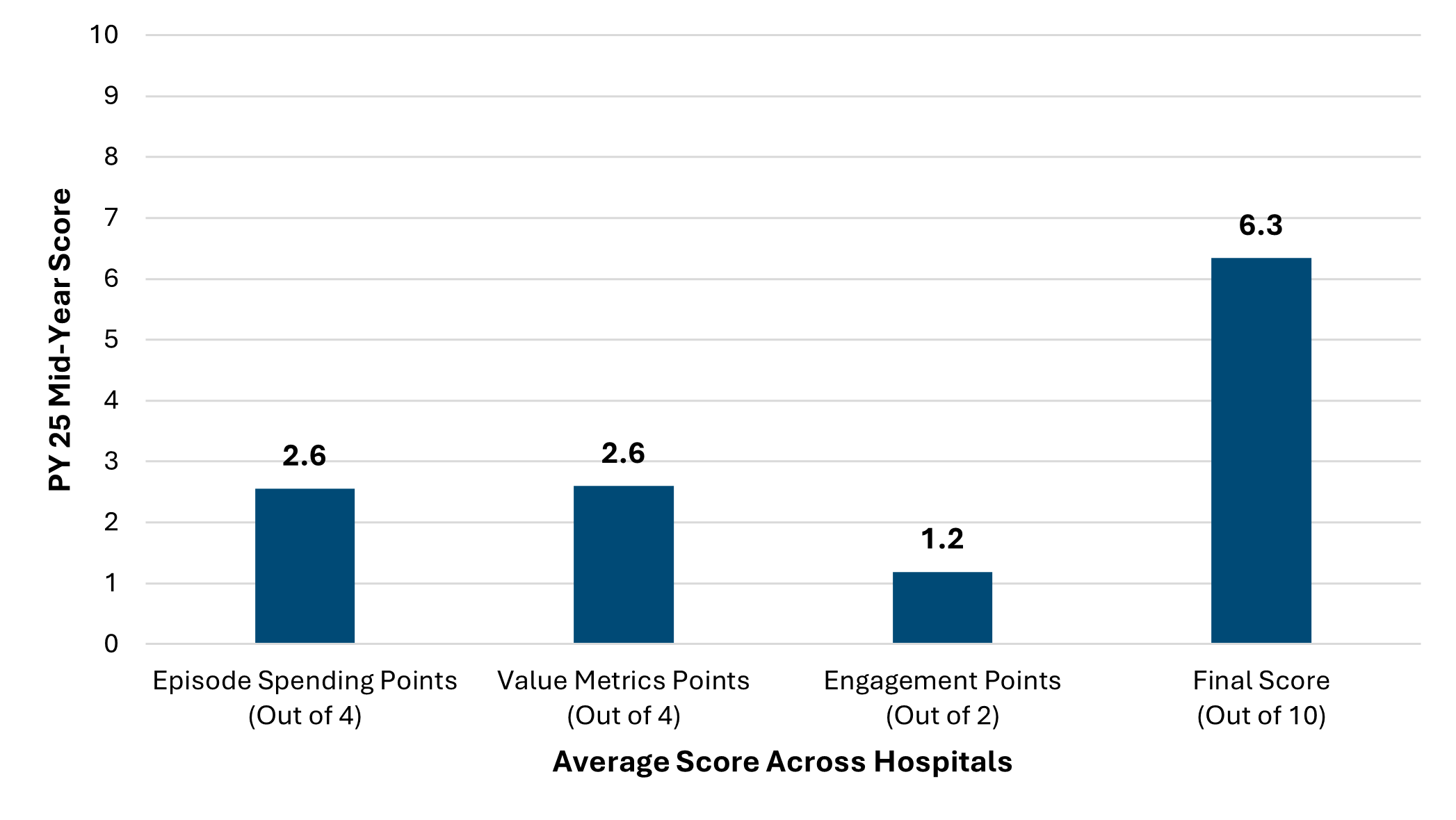
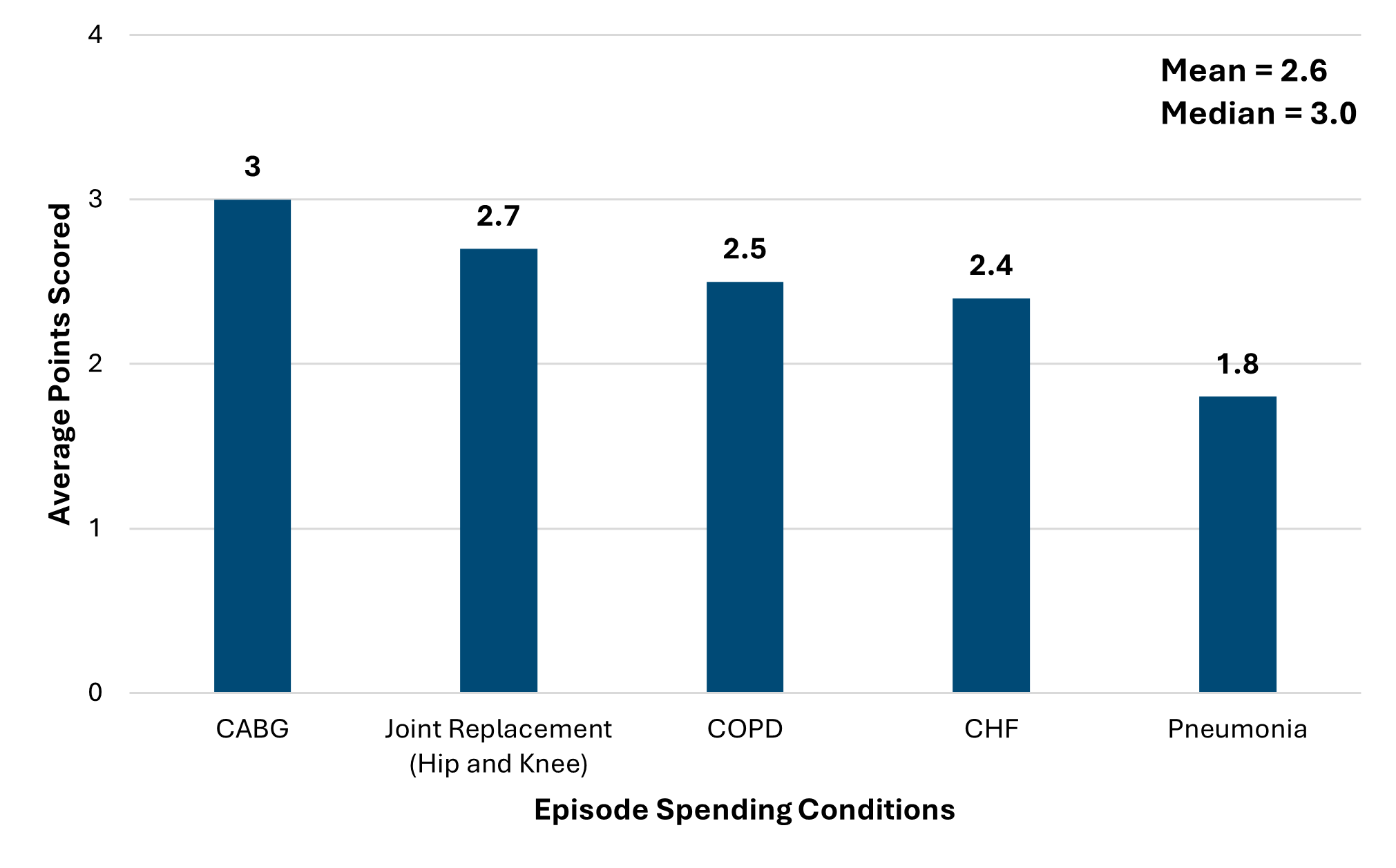
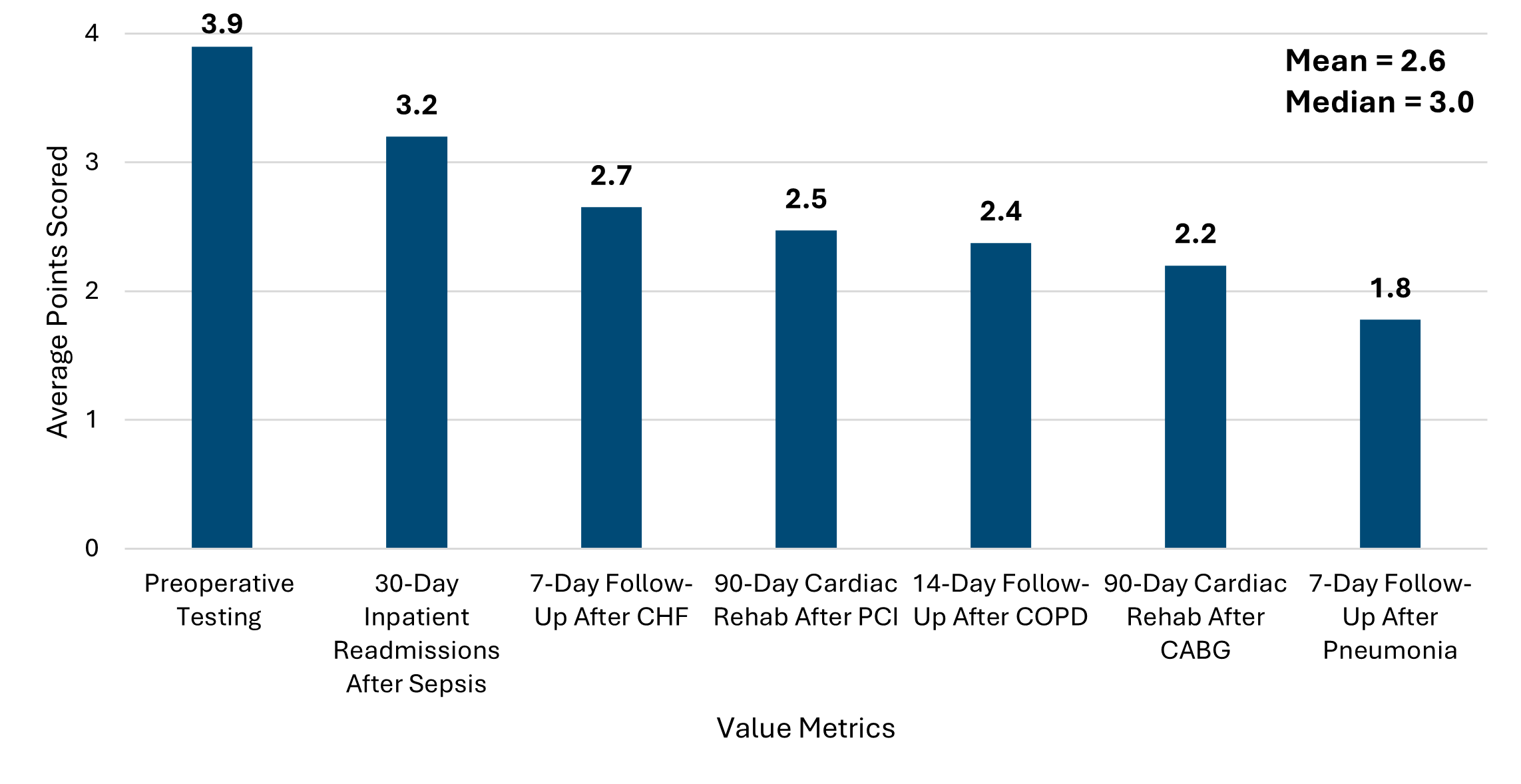
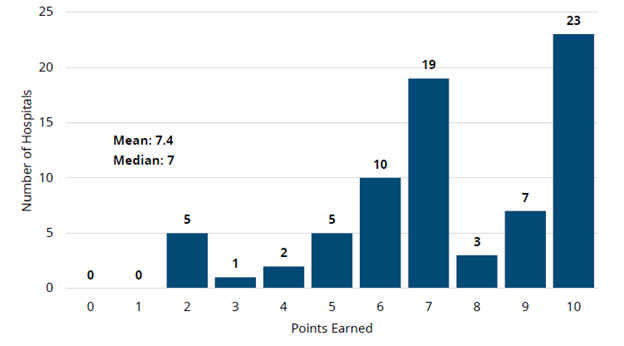
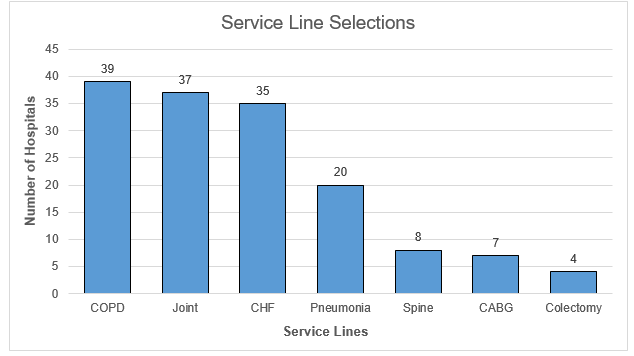
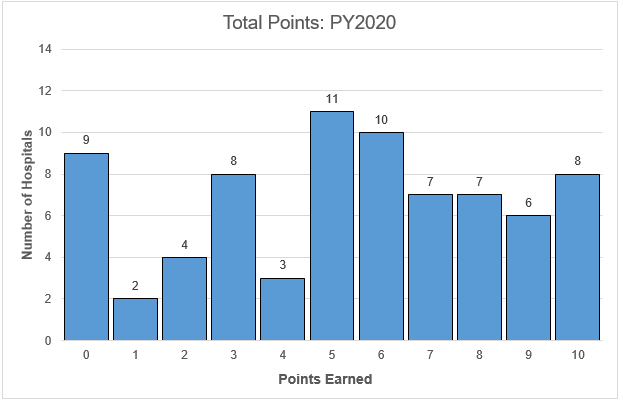
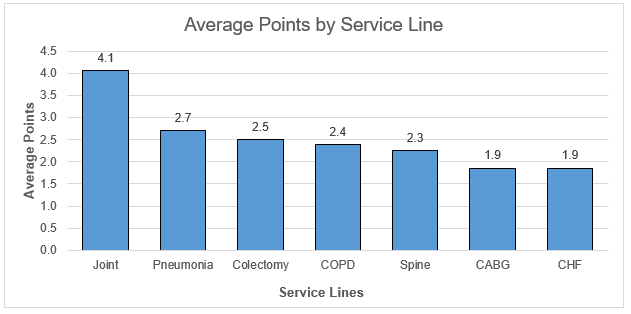
After providing MVC Coordinating Center updates, Bradshaw moved on to provide insights into final scoring of P4P PY 2025 (see Figures 1-3), which included slight increases in average total points scored from PY 2024, some improvements in engagement point scoring, and continued scoring success for value metrics tied to MVC’s value-based initiatives (e.g., cardiac rehab and preoperative testing metrics).
Figure 1. Distribution of MVC’s P4P PY 2025 Total Points
Figure 2. MVC’s P4P PY 2025 Scoring Breakdown by Episode Spending and Value Metric Selections
Figure 3. MVC’s P4P PY 2025 Engagement Point Distribution
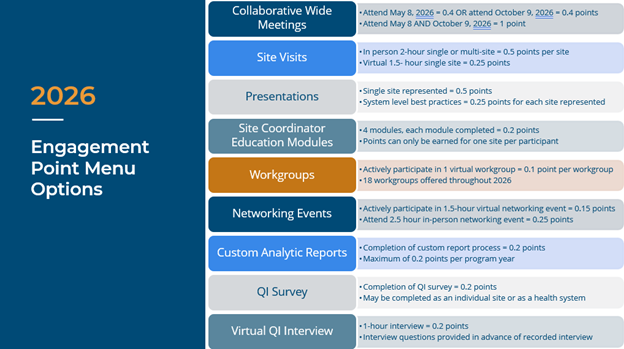
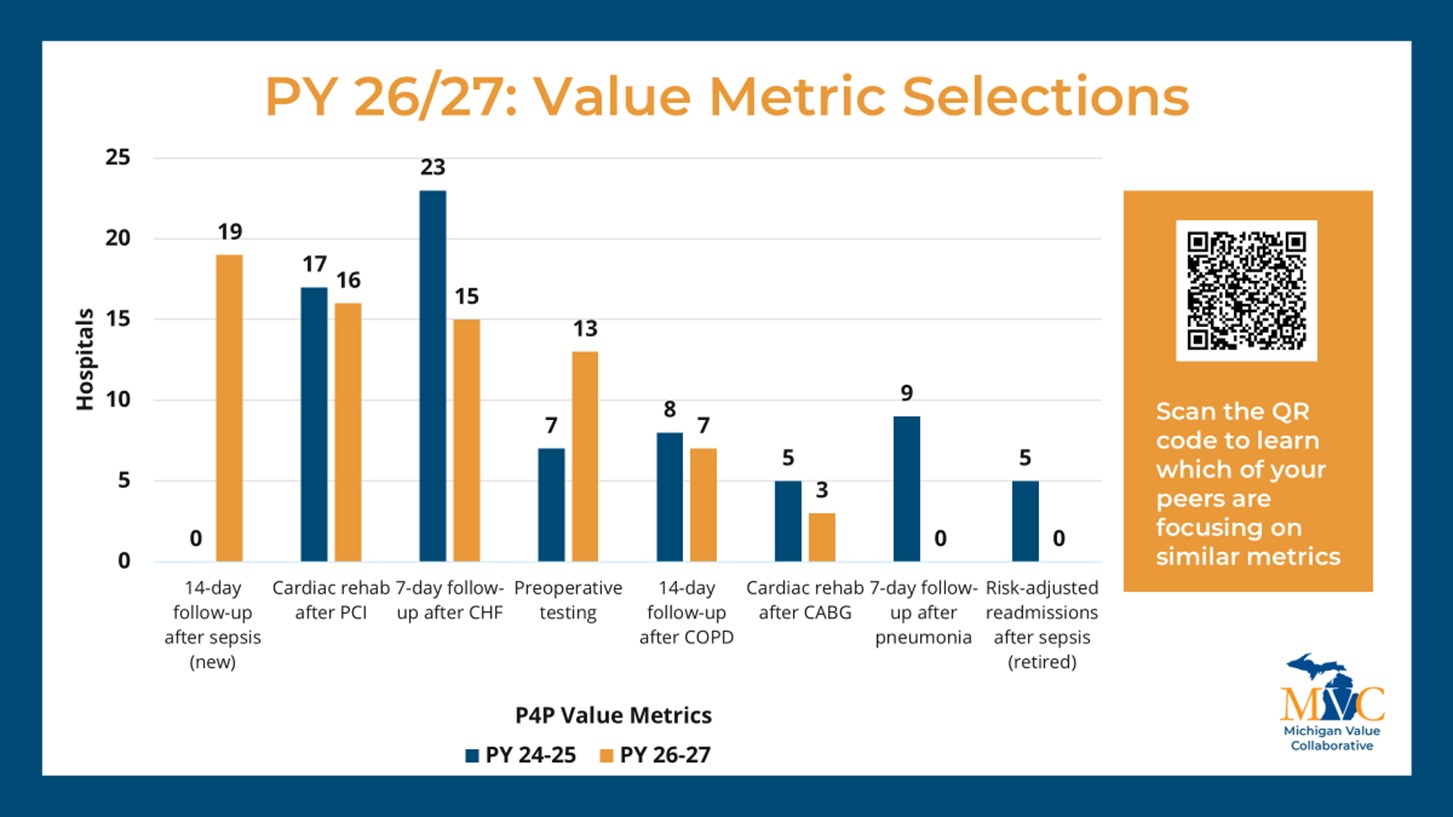
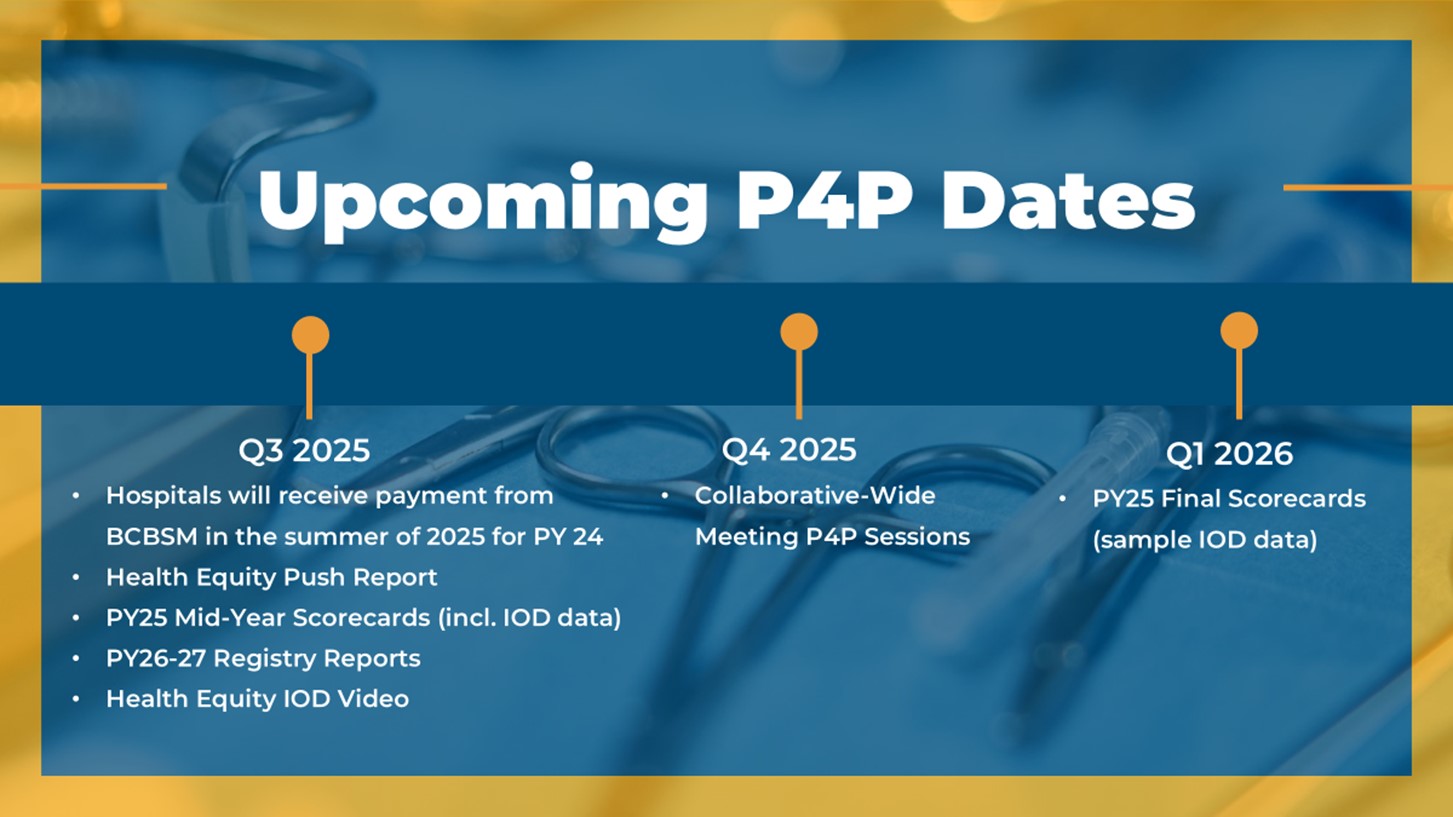
After reviewing hospital performance in 2025, Bradshaw looked to the PY 2026-2027 cycle, announcing a one-time alternative point opportunity for PY 2026 to earn credit for MVC’s new health outcome variation (HOV) metric. Additional details on submission requirements and timelines will be announced to site coordinators in the coming weeks. Following this, he noted the many opportunities to earn engagement points remaining in calendar year 2026 including virtual workgroups, networking dinners, and MVC’s fall collaborative-wide meeting in Livonia. For a complete schedule of events and registration, please visit MVC’s events webpage. Bradshaw reminded members that PY 2026 mid-year scorecards are expected in Q3 2026, and hospitals will be asked to make metric selections for PYs 2028-2029 in Q4 2026.
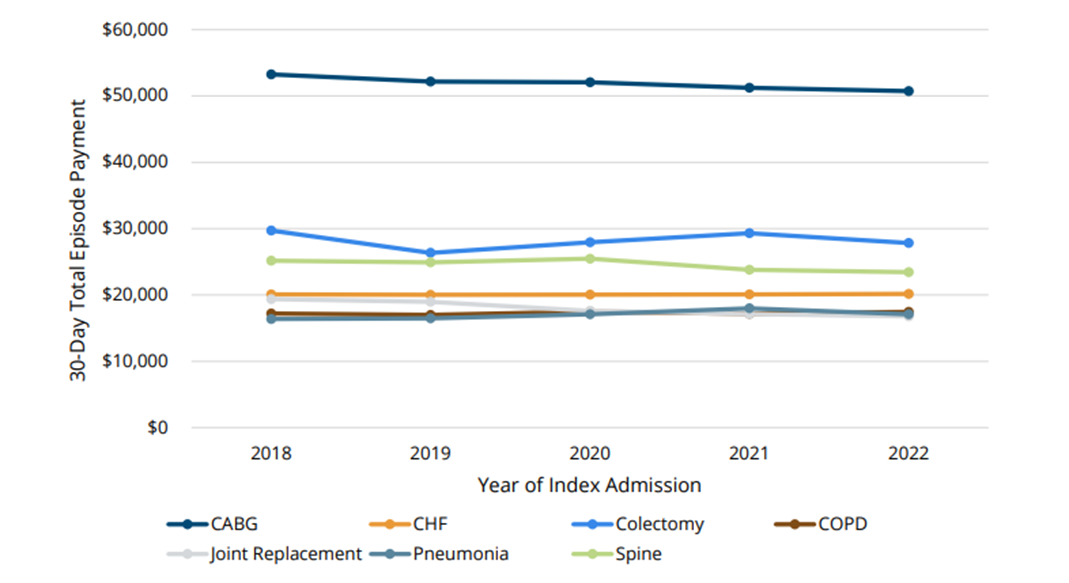
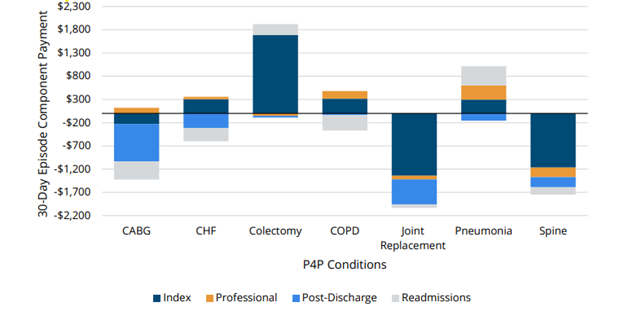
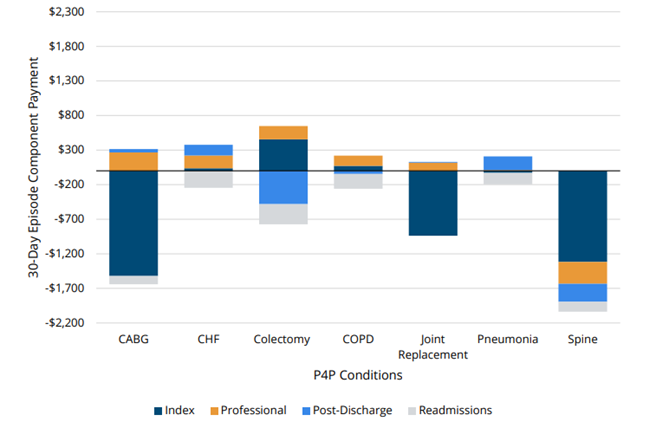
The meeting then featured an MVC data presentation by MVC Medical Director Hari Nathan, MD, PhD, and MVC Analyst Janet Zhang, MPH, on reporting and benchmarking outcomes across Michigan health systems. Dr. Nathan began with a discussion on the gradual, structural shift over the last two decades from independent ownership towards health system affiliation, noting that Michigan has outpaced national averages for system affiliation. He then reviewed the current state of MVC’s system-level reporting and outlined other measures of system variation from the literature not currently utilized in MVC reporting (Figure 4), emphasizing the need for MVC and its membership to co-design a path for measuring system-level quality in the future.
Zhang supplemented the presentation by sharing unblinded data on variation in hospital-level risk-adjusted 30-day readmission rates within hospital systems. She outlined traditional methods of showcasing variation using caterpillar plots and demonstrated how MVC might leverage hospital-level data to calculate a single index value for systems to support tracking variation over time. Zhang and Dr. Nathan both emphasized the importance of considering quality in outcomes and variation in outcomes as they evaluate their system-level performance.
Figure 4. Sample Approaches to Measuring System Variation
Building on the data presentation, a panel discussion led by Dr. Nathan further explored what “systemness” and system quality of care mean in practice and how stronger integration can improve quality, outcomes, and access across health systems and networks. Panelists included Alex Callaway, MBA, CPHQ, CPPS, Regional Quality Director of Munson Health System; Emily Nerreter, MBA, CPC, CRC, Pay for Performance & Registries Manager of Henry Ford Health System; and Stephanie Pins-Schallip, MSA, CPHQ, Director of Value Analysis & Enhancement of MyMichigan Health. Each panelist brought unique perspectives and experience to the discussion, presenting compelling evidence to support the optimization of system-level resources, data, and cooperation.
Attendees then spent the remainder of the morning in breakout sessions [see breakout session slides] learning from peers, sharing intervention success stories, and brainstorming approaches to measuring quality in both small, stand-alone hospitals and large multi-hospital systems:
- Catalyst Community for Improvement: Transforming Performance Together (Corewell)
- Roadmap to Building Strong Post-Acute Care Network (Trinity Health Alliance)
- Developing a Heart Failure Care Management Program (Trinity Health IHA)
- Rural & Critical Access Hospital Claims Data Reporting Strategies (MVC)
- Advancing System-Level Quality Improvement: Exploring Concepts for New MVC Metrics (MVC)
Following a networking lunch and a second session of breakouts, attendees came back together for the presentation of MVC awards by Engagement Manager Jessica Souva, MSN, RN, C-ONQS. The 2025 Engagement Award recipients included:
- Henry Ford Health – 2025 Most Engaged System
- Primary Care Partners, Inc. - 2025 Most Engaged Physician Organization
- Scheurer Health – 2025 Most Engaged Critical Access Hospital
- University of Michigan Health-West – 2025 Most Engaged General Acute Care Hospital
Souva also announced the winner of the poster contest, which was identified through member voting during the afternoon poster session. University of Michigan Health – Sparrow Carson won “best poster” for their “Rural Sepsis Initiative: Timely Care, Better Outcomes” poster submission. The poster was presented by Sara Hagerman, BSN.
The meeting closed with a reflection of the day’s themes and sessions, and reminders about upcoming meetings and events.
What are attendees saying about the meeting?
“The interactive sessions were great, and so was the location.”
“Today was a really great day, filled with a lot of discussion, networking and interactive activities.”
“This was my first meeting. I appreciate the information shared and opportunity.”
“I liked the panel discussion today. In the past, I also like the different tables of presenters to allow for smaller group discussion. Overall, lots of good discussion on how to work in a system.”
“Always love coming to MVC collaborative wide meetings as they’re so informative and a great way to network with others who have the same or very similar goals and outcomes!”
“The information presented was highly applicable across systems and independents.”
If you have questions about any of the topics discussed at MVC’s spring collaborative-wide meeting or are interested in following up for more details, please email the MVC Coordinating Center. MVC’s next collaborative-wide meeting will be held in person on Fri., Oct. 9, 2026, in Livonia, Michigan.