0
View Post
CQI Spotlight: Michigan Oncology Quality Consortium

CQI Spotlight: Michigan Oncology Quality Consortium

Cancer care is not defined by treatments alone—it is measured by the experiences, quality of life, and outcomes of the people navigating the disease. Across Michigan, patients with cancer face complex clinical decisions alongside challenges that extend beyond the clinic, from treatment side effects to barriers in accessing supportive services. Through statewide collaboration, shared data, and a commitment to improving care delivery, the Michigan Oncology Quality Consortium (MOQC) is working to ensure that patients and their caregivers receive more consistent, compassionate, and high-value cancer care.

Established in 2009, MOQC was tasked with addressing oncology data that showcased significant variation in care outcomes as well as significantly higher costs compared to other areas of healthcare. One of 21 Collaborative Quality Initiatives (CQIs) sponsored by the Blue Cross Blue Shield of Michigan (BCBSM) Value Partnerships Program, MOQC’s aim is to improve access, value, and quality of care for all invasive cancers.

In addition to establishing cross-cutting measures that apply to all disease groups within oncology, MOQC’s work expanded to acknowledge and address the impact of non-medical drivers of health on patient outcomes, intentionally creating space for more patient, caregiver, and frontline voices to shape meaningful change and guide the evolution of cancer care in Michigan.

Services and Benefits for MOQC Members

MOQC provides access to resources and tools, quality improvement initiatives, partnerships, funding, and support that its membership of 54 oncology practices would not otherwise have available. Through collaborative-wide and regional meetings, MOQC fosters member networking, ongoing education on best practices and emerging topics, new publications, and collaboration opportunities. MOQC also meets with oncology practices individually to review their performance measures. For those needing additional support in any area, MOQC conducts root cause analyses in collaboration with the healthcare team and provides resources and consultation on their processes and progress.

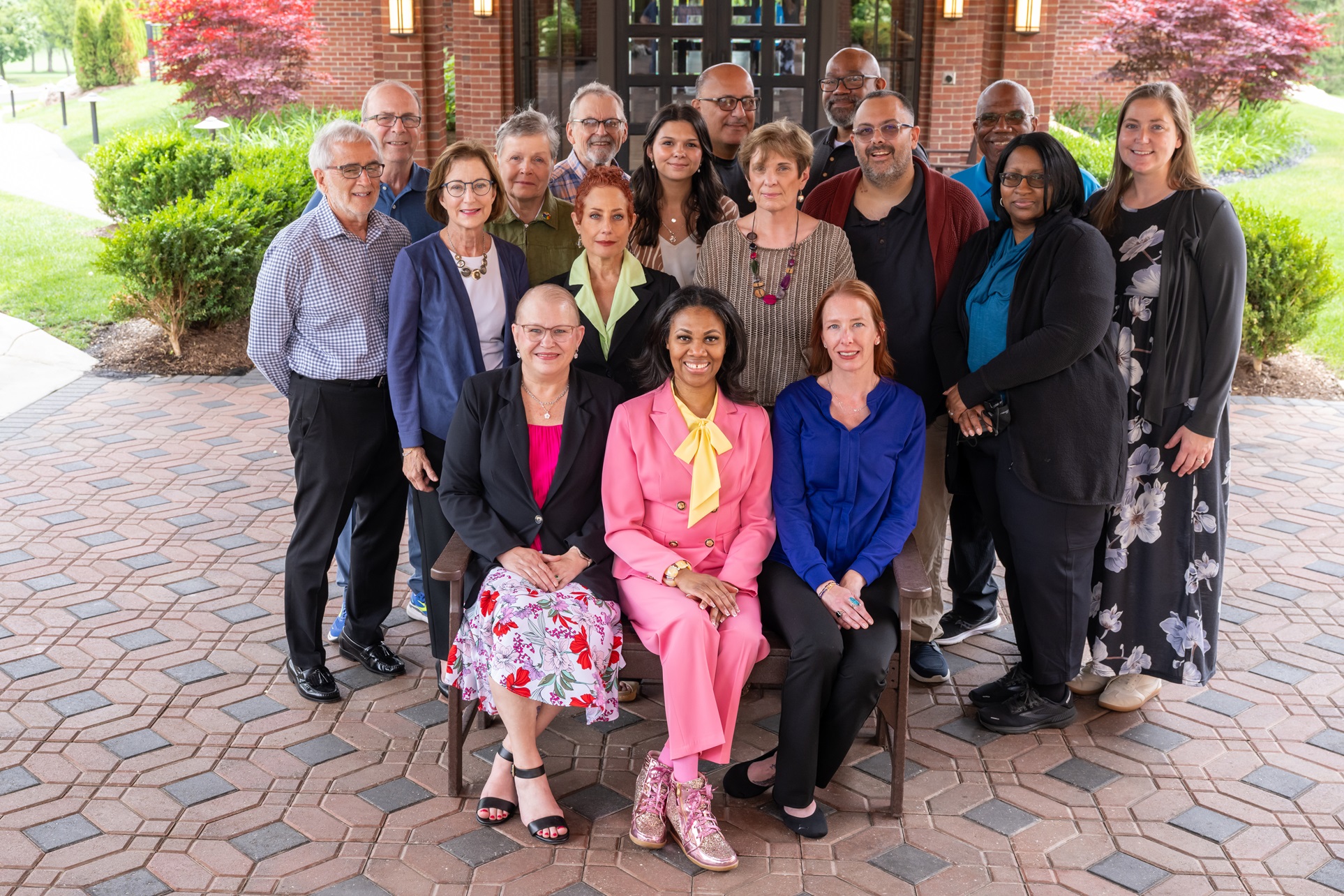
Members also benefit from access to the Patient and Caregiver Oncology Quality Council (POQC), a robust and highly engaged patient advocacy group currently comprised of 30 members (Figure 1). POQC gives teams the opportunity to learn directly from the lived experiences of patients and caregivers and brings forward barriers to care that may not be visible in data alone. POQC also contributes to decision-making about quality measures and initiatives through their work on MOQC’s Measures and Steering Committees. Their voices help member practices stay connected to the heart of what they do as they work to help guide MOQC’s efforts toward fair, effective, and compassionate health outcomes across the state (Figure 2).

Figure 1. Patient and Caregiver Oncology Quality Council (POQC)
group photo

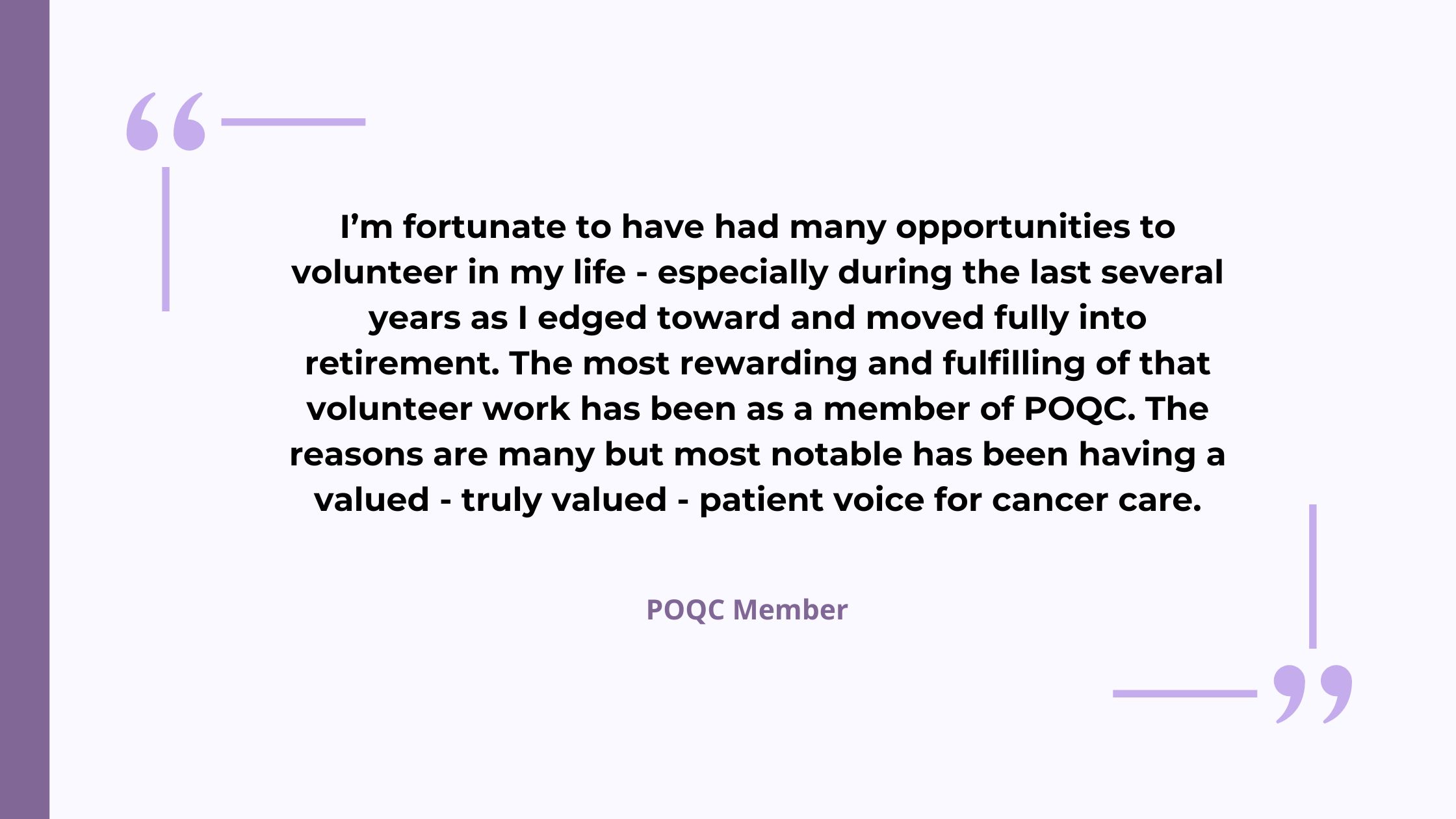
Figure 2. POQC Member Quote

A text-based graphic features a testimonial quote from a POQC member expressing gratitude for volunteer opportunities and the rewarding experience of being a valued patient voice for cancer care.

MOQC members also have the opportunity to establish integrated clinical pharmacist positions providing direct patient care through the Pharmacists Oncology Excellence Program in Michigan (POEM). This program, which has been in place for five years, encompasses 12 pharmacists who support 113 physicians across 28 practices. POEM has been associated with a variety of positive patient care outcomes and clinic time savings relating to clinical care activities.

MOQC’s Key Initiatives and Achievements

Through MOQC’s targeted initiatives, oncology care and outcomes are improving across Michigan. The Palliative Care and Hospice initiative aims to increase time enrolled in hospice to maximize benefits and quality of life for patients and caregivers. By creating tools for how and when to talk to cancer patients about palliative and hospice care (Figure 3), MOQC practices have seen hospice care enrollment improve from 44% in 2017 to 66% in 2024. In the words of a member physician,

“There is so much to help us do better at survival in cancer, and so many more new treatments out there, but the one thing that is often overlooked is – is it the right thing to do for the patient? So I was thrilled to see that MOQC is focusing on hospice. It’s so under looked in oncology these days.”

Figure 3. MOQC Hospice Conversation Guide for Physicians
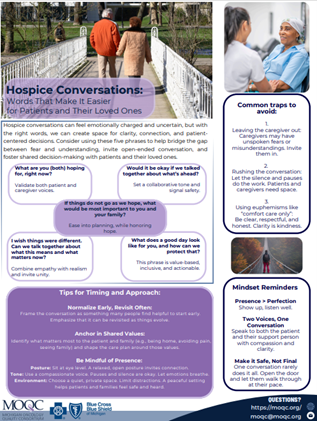
An informational flyer titled "Hospice Conversations: Words That Make It Easier for Patients and Their Loved Ones" provides guidance on improving communication during hospice care.

A complimentary initiative, expanding palliative care access through a partnership with the Center to Advance Palliative Care (CAPC), provides training curriculum to advance practice providers (APPs) regarding primary palliative care, with intentional recruitment in areas of the state that have little-to-no palliative care currently. Those who complete the curriculum attain a certificate from CAPC and integrate primary palliative care into their ongoing care of patients and caregivers.

Patient quality of life is an important consideration in cancer care. To address nausea, a common side effect of chemotherapy that significantly impacts patients’ quality of life, MOQC launched a Chemotherapy-Induced Nausea and Vomiting (CINV) – Antiemetics initiative in 2020. The initiative works to increase prescribing of olanzapine to manage treatment-related nausea. Since the initiative began, prescribing of olanzapine has increased from 10% to the notable achievement of 60% in 2024, helping more patients have better treatment experiences. To help evaluate the impact of this effort, MOQC reached out to the Michigan Value Collaborative (MVC) to leverage its robust claims-based data. Together, MVC and MOQC evaluated the impact and value of this initiative in a 2023 impact and value assessment, and the two teams are in the process of refreshing that analysis with newer years of claims data.

Other initiatives include implementing a statewide gynecologic oncology virtual tumor board to support multidisciplinary learning, standardize care recommendations across practices, expand access to clinical trials, and expand perspectives for clinicians caring for patients throughout Michigan. MOQC helps optimize statewide treatment of advanced non-small cell lung cancer via an oncology stewardship initiative focused on improving biomarker testing across the state and increasing education around targeted therapies.

In addition to centering patient voices through POQC and many other MOQC accomplishments, a major achievement of MOQC is the development of a comprehensive Excellence in Quality Certification program that recognizes oncology practices providing high-quality and high-value care. Eligibility criteria include a site visit to ensure safe practices regarding anticancer therapy, measure performance, medical record review, and policy review. All criteria measure policy and practice to validate that oncology care is guideline-concordant and recognizes substantial decreases in variations in care and in costs of care (Figure 4). A key component of the certification is creating an action plan to close non-medical gaps in healthcare, ensuring all cancer patients in Michigan have the same access to high quality care. Fourteen out of MOQC’s 54 practices were certified in 2024, and 23 practices pursued certification in 2025.

Figure 4. MOQC Excellence in Quality Certification Criteria
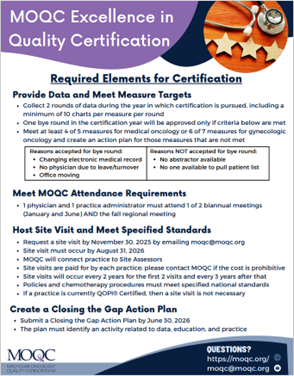
A screenshot of a certification guideline document titled "MOQC Excellence in Quality Certification," outlining required elements for certification in oncology quality.

MOQC is proud of its commitment to addressing the non-medical needs of patients and caregivers through the POQC and the Excellence in Quality Certification program. Additional ways MOQC centers this aspect of patient care is by endeavoring to provide patients with increased access to supportive services and resources, including standardizing screening for non-medical needs, integrating referrals to Michigan 2-1-1 into electronic medical records (EMR), providing meals to patients who are currently food insecure and receiving anticancer therapy (plus up to one caregiver per patient), and facilitating financial navigation training for interprofessional members of oncology care teams. Non-medical patient needs and gaps in care are also being addressed through MOQC’s stewardship initiative, which aims to improve the use of systemic anticancer therapy with the goal of enhancing patient health outcomes while reducing financial strain on patients. In addition, MOQC conducts multivariate analyses of its measures annually to find gaps in care based on demographic categories. These analyses allow MOQC to review variation among practices and collaborate individually with them as needed to close gaps.

Looking Ahead: Continuing to Drive Whole Team Collaboration

MOQC’s work offers a reminder that improving oncology care often requires thinking beyond traditional approaches. By weaving patient and caregiver experiences into the fabric of their work, MOQC is able to look for gaps in care, prompt new questions, and reshape how they understand quality. MOQC’s initiatives and learning opportunities (such as interprofessional development sessions, the statewide tumor board, the palliative care certificate program, and addressing non-medical needs) are shaped with recognition that there is a whole team involved in the patient care related to MOQC’s quality measures. MOQC invites practices to engage with quality improvement in ways that expand perspective and challenge existing healthcare power dynamics. Through this multifaceted approach, MOQC is always striving to look for a deeper partnership with all of the people most affected by the outcomes.

The BCBSM-funded CQIs play a crucial role in driving healthcare quality improvement in Michigan. MVC is excited to continue highlighting the innovative contributions of individual CQIs and the ways in which MVC’s data are supporting high-value care initiatives across the portfolio. Please reach out to MVC by email if you are interested in learning more.
 

0
View Post
November Workgroups Highlight Mobile Health and Patient Storytelling

November Workgroups Highlight Mobile Health and Patient Storytelling

In November, MVC hosted two virtual workgroup presentations – the first, a rural health workgroup, featured Hillsdale Hospital’s mobile health unit initiative. The second, a post-discharge follow-up workgroup, continued a presentation started at MVC’s February 2025 health in action workgroup on patient journey mapping and introduced a joint patient storytelling project by Healthy Behavior Optimization for Michigan (HBOM) and Michigan Cardiac Rehab Network (MiCR). The MVC Coordinating Center hosts workgroup presentations twice per month covering a variety of topics including post-discharge follow-up, sepsis, cardiac rehab, rural health, preoperative testing and health in action.

Rural Health Workgroup – Hillsdale Hospital 

The first workgroup of the month provided a review of Hillsdale Hospital’s mobile health unit, which aims to deliver essential health services to patients living in rural communities who may otherwise struggle physically or financially to reach traditional care settings.

As Lindsey Crouch, Director of Outpatient Clinics, Home Care, and Durable Medical Equipment for Hillsdale Hospital explained, rural communities face higher health outcome variation, transportation issues, limited accessibility to primary care providers, and high unnecessary emergency department (ED) utilization (Figure 1).

Figure 1. Hillsdale County Community Health Needs Assessment (CHNA) Survey Data: Difficulty Finding or Getting Transportation to a Doctor in 2024, 2022, 2019, and 2016

vertical bar graph: Hillsdale County Community Health Needs Assessment (CHNA) Survey Data: Difficulty Finding or Getting Transportation to a Doctor in 2024, 2022, 2019, and 2016

During the Covid-19 pandemic, Hillsdale County’s health department purchased a mobile health unit in an effort to close the gap in healthcare access for their community. However, despite continued need, utilization of the mobile unit has waned in recent years.

Hillsdale Hospital aimed to revitalize the mobile health unit to:

  1. Bridge access gaps in rural areas. For many rural residents, distance to hospitals or clinics, limited transportation, and infrastructure challenges can hinder timely access to care. A mobile health unit can bring services to patients rather than requiring patients to travel long distances. This helps to reduce one significant non-medical barrier to care.
  2. Focus on preventive and ongoing care. The mobile unit’s design supports not just acute care, but preventive services — screenings, check-ups, chronic disease management — especially helpful for rural populations that may have higher chronic disease burden and less frequent access to routine care.
  3. Address gaps in health outcomes between communities. By delivering care directly to underserved communities, this model aligns with broader efforts to ensure that where a person lives does not determine whether they receive high-value, quality healthcare.

Throughout this program, Hillsdale Hospital aimed to improve health outcome variation with a goal to achieve a 15% improvement in selected chronic disease metrics (e.g., blood pressure control) while also establishing partnerships with local organizations for sustainability.

Throughout the presentation and follow-up discussion, participants addressed several key considerations related to implementing and operating the mobile health unit including:

  • Logistical planning & scheduling. Which rural towns or areas will be served? How often do visits occur? How to communicate the schedule to residents to maximize utilization?
  • Service offerings. What mix of services beyond basic triage should be included? Considerations may include screenings, chronic disease management, preventive care, and referrals when needed to ensure the mobile unit meaningfully supplements local rural healthcare capacity.
  • Coordination with local providers. What existing local hospitals, clinics, and community health organizations should be involved to ensure continuity of care? Consider these, especially follow-up and referrals, for more advanced services.
  • Addressing rural-specific challenges. What unique barriers impact your community? Consider transportation, limited staffing, and supply chain constraints.

Hillsdale Hospital’s mobile health unit embodies a vision for bringing high-value, high-quality care to rural Michigan. By lowering access barriers and delivering preventive and ongoing services directly to patients in their communities, this initiative can help improve health outcomes, reduce reliance on emergency services, and foster trust in healthcare among rural residents.

Insights from this workgroup have several practical implications for other rural hospitals and provider organizations across Michigan:

  • Expansion is possible through mobile care. Rural hospitals can leverage mobile health units as an extension of their current clinical outreach, helping to connect with populations that may rarely visit brick-and-mortar facilities.
  • Support chronic disease management. By delivery of routine care and screenings, mobile units can help stabilize chronic conditions earlier, reducing acute exacerbations and potentially reducing avoidable ED visits.
  • Enhance care coordination. Partnering with mobile health teams and community resources can help coordinate follow-up appointments, testing, and specialty referrals to create a more continuous care experience for rural patients.
  • Advance population health goals. Mobile services can function as a tool within a hospital’s broader population health strategy, align with value-based initiatives, community health needs assessments, and provide the opportunity for all people to achieve optimal health goals.
  • Gather meaningful community insights. Regular presence in rural communities can help hospitals better understand local barriers, non-medical drivers of health, and other care gaps which may inform program planning, grant proposals, and collaborative partnerships.

MVC Rural Health Workgroup: Nov. 4, 2025

Post-Discharge Follow-Up Workgroup – MVC and HBOM

The second MVC workgroup of November featured a joint presentation by MVC’s Associate Program Manager, Jana Stewart, MPH and HBOM’s Informatics Design Lead, Noa Kim, MSI. The workgroup kicked off with an overview of the rationale behind placing a greater emphasis on post-discharge follow-up – particularly how timely and effective follow-up care can reduce readmissions, improve patient outcomes, and ease transitions from inpatient to outpatient or home settings.

Next, as a continuation of the February 2025  health in action workgroup presentation on patient journey mapping, Stewart showed how mapping can be used to highlight key moments in a coronary heart failure (CHF) patient’s journey where there may be opportunities for post-discharge care coordination improvement – e.g., medication reconciliation, patient knowledge, frequent rehospitalization, low follow-up rates, and lack of social and community support.

An important strategy for combating these challenges for CHF patients is engagement in cardiac rehabilitation. And yet, patients rarely optimize this opportunity. Patient storytelling can help patients recall details, model scenarios a patient may experience in the future, and reduce the burden of information provided during a visit and may be a strategy to optimize cardiac rehab enrollment.

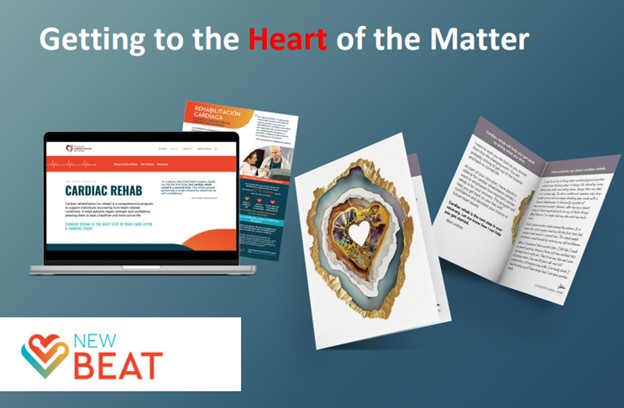
Under the umbrella of Michigan Cardiac Rehab (MiCR), a collaboration between the Blue Cross Blue Shield of Michigan Cardiovascular Consortium (BMC2), MVC, and HBOM, several initiatives have been developed aimed at optimizing guideline-directed medical therapy including the development of NewBeat materials and now the Heart-to-Heart storytelling campaign (Figure 2).

Figure 2. Examples of MiCR Guideline-Directed Medical Therapy Campaigns

NewBeat materials and the Heart-to-Heart storytelling campaign

As Kim explained, the goals of the Heart-to-Heart project are to collect diverse first-person accounts of cardiac rehab in video, audio, and photo formats from patients and clinicians from across Michigan to produce a compelling, free, reusable story library for use by cardiac rehab advocates across Michigan and beyond.

For hospitals and health systems across Michigan seeking to improve post-discharge outcomes, insights from this workgroup offer the following next steps:

  1. Use journey mapping and storytelling in quality improvement. By mapping patient journeys and capturing patient experiences, providers can better identify and address systemic barriers to safe discharge and recovery.
  2. Adopt standardized discharge-to-follow-up workflows. Hospitals should ensure that discharge planning includes scheduling follow-up appointments, medication reconciliation, and clear communication of next steps before patients leave the hospital.
  3. Prioritize high-risk patients for post-discharge support. Patients with chronic illness, limited social support, or social determinants that might hinder recovery deserve extra attention during discharge planning and follow-up scheduling.
  4. Assign care coordinators or navigators. Especially for high-risk or complex patients, dedicated staff to oversee follow-up care – manage appointments, support communication, track adherence, and offer resources – may reduce readmissions and improve outcomes.
  5. Leverage post-discharge care as part of value-based care strategy. Effective follow-up after discharge supports long-term patient health, reduces avoidable costs, and aligns with goals of high-value care frameworks.

MVC Post-Discharge Follow-Up Workgroup: Nov. 20, 2025

If you are interested in pursuing a healthcare quality improvement project, MVC has data specialists available to help you navigate our data resources and create custom analytics reports to support your efforts. Please reach out to us by email [LINK] if you would like to learn more about MVC data or engagement offerings!

0
View Post
October Workgroup Highlights Food FARMacy Program for Chronic Disease Management

October Workgroup Highlights Food FARMacy Program for Chronic Disease Management

In October, MVC’s health in action workgroup featured Hurley Medical Center’s Amanda Escalera-Torres, RD, Director and Nutrition Specialist for their Food FARMacy program. The presentation shared how the program helps support patients with chronic diseases by providing healthy food and nutrition education. The MVC Coordinating Center hosts workgroup presentations twice per month, covering a variety of topics including post-discharge follow-up, sepsis, cardiac rehabilitation, rural health, preoperative testing, and health in action. 

Health in Action Workgroup: Hurley Medical Center 

Hurley Medical Center’s Food FARMacy initiative was founded in 2017 to address Genesee County’s higher food insecurity rate of 13% (compared to the state average of 11%). It was funded by several grants and the Hurley Foundation to provide support services such as grocery access and nutrition education for Hurley patients. According to a 2024 MVC member survey, programs such as this are becoming more common in health systems across the state to address non-medical drivers of health such as food insecurity, economic and housing instability, and other factors. Food insecurity and being unable to access nutritious food has been linked to an increased risk of chronic diseases such as diabetes, cardiovascular disease, and certain types of cancer (Odoms-Young, 2024).  

Patient Eligibility and Enrollment 

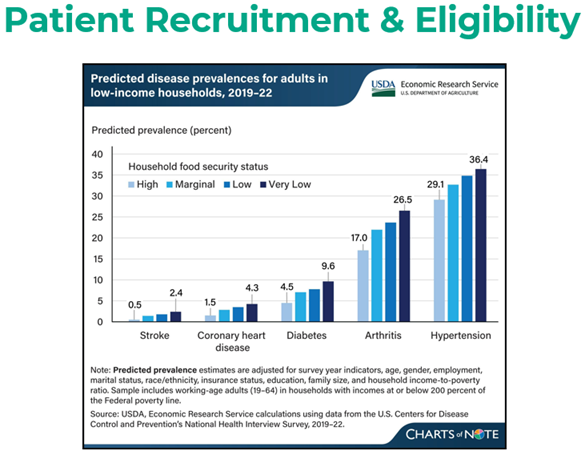
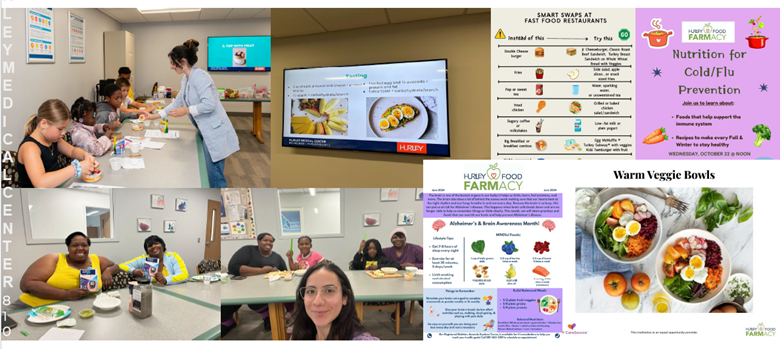
Escalera-Torres shared that patients are eligible to enroll in the Hurley Food FARMacy program if they are both food-insecure and have a chronic diet-related condition (Figure 1). Patients are referred to the program through avenues such as Hurley Medical Center inpatient or outpatient services, community health clinics, or primary care clinics throughout Genesee County. Once enrolled, patients receive monthly grocery support, meal kits, and nutrition classes for up to six months (Figure 2). 

Figure 1.

vertical bar chart of predicted disease prevalence for adults in low-income households 2019-2022, source: USDA Economic Research Service

Figure 2.

Food FARMacy nutrition education classes and materials

Food Distribution Process 

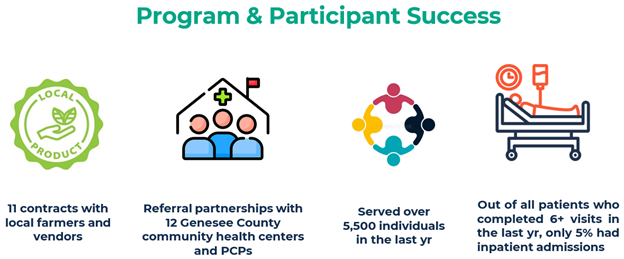
Each month, Hurley’s Food FARMacy program provides 300–400 patients with food access and education. Groceries are acquired through established contracts with local farmers and vendors and include locally sourced fresh fruits, vegetables, grains, meat, and more.  

Program and Participant Success 

Hurley Food FARMacy expanded their food resources by increasing their farmer and vendor contracts to 11 this past year. This provides more accessibility for food and helps boost the local Michigan economy. The program also established 12 referral partnerships across Genesee County’s community health centers and primary care providers, allowing the program to serve over 5,500 individuals in the last year. Among the population served, only 5% of those who completed six or more Food FARMacy visits in the last year had an inpatient admission (Figure 3).  

Figure 3.

Food FARMacy program and participant successes

Reducing Barriers 

Following the presentation, Escalera-Torres answered questions about the ways the program has been able to reduce barriers to access, including how food supply was managed during the off-season and how they accommodated patients with transportation limitations. Escalera-Torres explained that the program did experience some difficulty acquiring fresh produce during the off-season but recently partnered with Great Lakes Farm to Freezer to ensure availability of a robust selection of nutritious foods year-round. To address patient transportation barriers, Hurley Food FARMacy partnered with Door Dash earlier in the year for a trial run of delivering food to participants. The program was well received but ended due to lack of continued funding. Patients with transportation barriers are now able to assign a proxy to pick up their groceries, which has helped reduce accessibility barriers.  

The Food FARMacy program will continue to adapt and serve Genesee County patients providing quality food and improving nutritional awareness for chronic diet-related illnesses.  

MVC's cardiac rehabilitation workgroup for October was rescheduled for February 2026. View the complete 2026 workgroup calendar here. 

MVC welcomes workgroup presenters from across Michigan to share their expertise, success stories, initiatives, and solution-focused ideas with MVC members. Please reach out to us by email if you are interested in being a workgroup presenter or submit a presentation proposal here. 

0
View Post
Fall Collaborative-Wide Meeting Agenda, Speakers Announced

Fall Collaborative-Wide Meeting Agenda, Speakers Announced

The MVC Coordinating Center is excited to announce the agenda for its fall collaborative-wide meeting on Fri., Oct. 10, 2025, from 10 a.m. – 3 p.m., at the Vistatech Center in Livonia, MI. This meeting’s theme is “Adapting Together in 2025 and Beyond: High-Value Care for All in a Changing Landscape.” This meeting will highlight the various ways in which MVC's members identify gaps in outcomes, adapt to ensure all patients receive the highest quality care, and establish partnerships and programs that mitigate non-medical drivers of health outcomes. Those interested in attending MVC's fall 2025 collaborative-wide meeting must register here by Thurs., Sept. 25.

MVC Director Mark Bradshaw, MSc, will kick off the day with Coordinating Center updates as well as announcements about the MVC Component of the Blue Cross Blue Shield of Michigan (BCBSM) Pay-for-Performance (P4P) Program. This will be followed by updates about 2026 engagement offerings presented by MVC Engagement Manager Jessica Souva, MSN, RN, C-ONQS.

MVC will then invite its first guest speakers of the day to the podium: Julia Weinert, MPH, MSHIELD Program Manager, and Brad Iott, PhD, MPH, MSHIELD Content Expert in Health Informatics and Social Care Integration. The MSHIELD team will lay the foundation for the day by discussing non-medical drivers of health and related implications for quality improvement teams, including examples of metrics that help evaluate care across all patients and interventions that can help reduce gaps in patient outcomes.

The event keynote will follow with a presentation by Gloria Rey, PA-C, MPH, Director of Post-Acute Care, Henry Ford Health. She will present on Henry Ford’s post-acute care (PAC) transition program, and the ways in which their team partners with PAC groups to ensure effective, individualized handoffs and care delivery for all patients.

Following lunch and networking, MVC Medical Director Hari Nathan, MD, PhD, will co-present with MVC Analyst Kushbu Narender Singh, MDS, MPH, for MVC’s Data in Action presentation. This data presentation will focus on MVC’s newest health outcome variation measure, including how it was developed, its use cases and benefits, a timeline for related data sharing, and unblinded data. This measure was a new addition to the MVC Component of the BCBSM P4P Program, with scoring on this measure beginning in Program Years 2026-2027.

Attendees will then transition into the afternoon breakout sessions, all led by guest hospital presenters. To showcase how members are addressing variation in outcomes, MVC invited presenters to discuss recent initiatives and successes across a range of focus areas, such as partnerships with community-based organizations, systematic approaches to referrals, and predictive analytics and assessment tools in EPIC. View a summary of all five breakout presentations here. Attendees will attend two breakout sessions before returning to the main ballroom for closing remarks and next steps.

The deadline to register for MVC’s fall 2025 collaborative-wide meeting is tomorrow, Sept. 25. We look forward to seeing you there!