Off
View Post
MVC October Workgroup Highlights MVC Cardiac Rehab Push Report

MVC October Workgroup Highlights MVC Cardiac Rehab Push Report

In October, the Michigan Value Collaborative (MVC) hosted a cardiac rehab workgroup featuring MVC’s newly released cardiac rehabilitation (CR) push report. The MVC Coordinating Center hosts workgroup presentations once or twice per month, covering a variety of topics including cardiac rehab, post-discharge follow-up, rural health, preoperative testing, sepsis, and health in action. View the full MVC event calendar with registration links here.

Cardiac Rehab Workgroup: MVC’s Refreshed Cardiac Rehab Push Report 

Since 2019, MVC has prioritized cardiac rehab as a value coalition campaign providing members with focused workgroups, site visits, and data resources to support quality improvement. Since then, MVC has continuously offered multi-payer reporting and benchmarking on a variety of cardiac rehab focused measures, first by offering dedicated push reports refreshed twice each year, followed by the launch of multi-payer reports on the MVC registry and the incorporation of cardiac rehab measures in the MVC Component of the BCBSM Pay-for-Performance (P4P) Program.

MVC continued to update data for its members by refreshing cardiac rehab push reports in September (read September 2026 blog for report details). MVC shared a stand-alone cardiac rehab push report this year, whereas recent years incorporated these data within a larger process measures push report.

During this month’s cardiac rehab workgroup, MVC Associate Program Manager Jana Stewart, MPH, provided a report walkthrough to familiarize MVC members with its data and changes relative to prior versions. In addition to traditional measures of enrollment, the latest report included measures of adherence and completion, in alignment with AACVPR performance measures.

Stewart said this expanded approach highlighted important opportunities for quality improvement along the patient care journey, from initial referral and enrollment processes to downstream retention strategies and patient barriers to participation. The measures were defined as:

  • Enrollment: The percentage of eligible patients who attend at least one cardiac rehab session within 90 days (Main 5 patients) or 365 days (CHF patients) of hospital discharge
  • Adherence: The percentage of enrolled patients who completed at least 12 cardiac rehab sessions within 365 days of discharge
  • Completion: The percentage of enrolled patients who completed at least 36 cardiac rehab sessions within 365 days of discharge

Together, Stewart described how these measures can help hospitals and cardiac rehab partners identify where patients may be falling out of the care pathway, starting with initial referral and enrollment through continued program participation and completion. Stewart encouraged members to use the provided patient characteristics table (Figure 1) to assess differences in cardiac rehab outcomes between different patient groups as well as identify patient gaps driven by non-medical drivers of health. The report also provided hospital-level comparisons with statewide averages, allowing members to assess their performance relative to their peers.

Figure 1. Slide highlighting Table 1 patient characteristic data from September 2026 cardiac rehab push reports
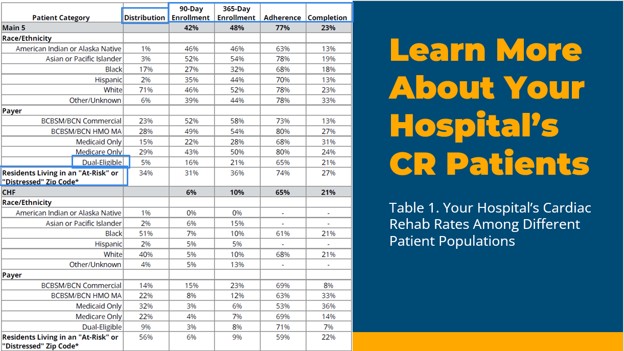
Table infographic titled “Your Hospital’s Cardiac Rehab Rates Among Different Patient Populations,” comparing cardiac rehabilitation metrics across patient categories. Rows cover race/ethnicity, payer, and residence in an at-risk ZIP code, with columns for distribution, 90-day enrollment, 365-day enrollment, adherence, and completion; blue table and orange-on-blue title panel emphasize population differences.

After reviewing the specifics of the updated push report, Stewart provided a brief look at statewide performance on each of these measures for the Main 5 and CHF patient populations. Overall, the findings demonstrated some progress in enrollment while highlighting opportunities to strengthen adherence and completion.

The Michigan Cardiac Rehab Network (MiCR) reported on cardiac rehab adherence and completion rates one year ago at its fall 2025 meeting, which compared participant adherence and completion rates across CR programs. This data presentation revealed a positive association between adherence rate and completion rate, with more consistently higher adherence rates observed amongst sites with higher completion rates (Figure 2). However, there were also sites with high adherence rates and low completion rates, suggesting a high adherence rate does not guarantee a high completion rate.

Figure 2. Cardiac Rehab Adherence and Completion Rates at Centers Across Michigan
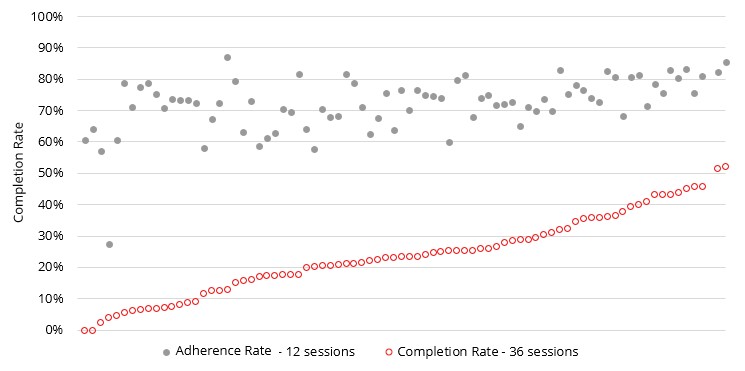
Scatter plot compares adherence rate across 12 sessions with completion rate across 36 sessions, using gray filled dots and red open circles against a 0%–100% completion-rate axis. Gray adherence values remain mostly 60%–85%, while red completion values rise steadily from 0% to about 52%, with labels and legend identifying each series.

Benchmarking Statewide Enrollment, Adherence, and Completion

The statewide cardiac rehab enrollment rate provided for Main 5 conditions was 34%, up from approximately 24% when focused improvement efforts began in 2019. However, this remains below the MiCR statewide goal of 40% and well below the Million Hearts goal of 70% for all eligible cardiac rehab participants.

For patients with CHF, the statewide enrollment rate of 6% also still falls short of MiCR’s 10% goal. Unlike enrollment for the Main 5 conditions, CHF enrollment rates have seen little improvement over the last few years. These findings reinforced the importance of an effective referral process, patient education, and continued engagement on the initiation of cardiac rehab for CHF patients. During the discussion, participants emphasized that heart failure patients may need additional time and repeated referrals before they initiate cardiac rehab.

Stewart emphasized how the additional measures of adherence and completion rates offered further insight into patient participation and full benefit from the program after enrollment. For the Main 5 conditions, the statewide adherence rate was 75% for the report's timeframe, meaning that approximately three-quarters of enrolled patients completed at least 12 sessions. However, the statewide completion rate among Main 5 patients was just 24%, reflecting the proportion of enrolled patients who completed 36 sessions within one year. For CHF, rates were similar to those of the Main 5 population—the statewide CHF adherence rate was 68%, while the completion rate was 24%.

Identifying Barriers and Supporting Patient Participation

During the workgroup discussion, members explored several factors that may affect enrollment, adherence, and completion. Common themes of the discussion included:

  • Provider endorsement and patient education: A clear recommendation from a physician can help patients understand why cardiac rehab is an important part of their recovery journey.
  • Financial and transportation barriers: Copays and the challenges of traveling to multiple appointments are known barriers for certain patient populations that may show up as low adherence or completion rates. Further analysis of cardiac rehab performance across payer and demographic groups could help better understand where additional support may be needed.
  • Flexible scheduling and delivery options: Flexible appointment times and hybrid cardiac rehab delivery models may help patients overcome scheduling and transportation challenges to improve adherence and completion.
  • Patient stories and testimonials: Participants discussed that patients may not feel ready to participate in cardiac rehab immediately after discharge, making continued outreach and education especially valuable. For patients with CHF in particular, the timing of referrals and reminders can be important. MiCR’s newest Heart-to-Heart initiative offers patient-story videos and testimonials that programs can use to help recruit patients for cardiac rehab, available on MiCR’s YouTube page.

These strategies offer starting points for local quality improvement. Stewart encouraged members to use their new cardiac rehab report findings to identify opportunities, engage relevant clinical and operational partners, and determine which approaches may be most appropriate for their patient populations. Members can also use the MVC registry to explore additional breakdowns of their data. For hospitals interested in more detailed analyses, MVC is available to discuss custom report opportunities.

MVC Cardiac Rehab Workgroup: Oct. 20, 2026

MVC welcomes workgroup presenters from across Michigan to share their expertise, success stories, initiatives, and solution-focused ideas with MVC members. Please reach out to the Coordinating Center by email if you are interested in being a workgroup presenter or submit a presentation proposal here.

Off
View Post
MVC’s Updated Common Conditions Report Now Available to Hospital Members

MVC’s Updated Common Conditions Report Now Available to Hospital Members

Earlier this month, the MVC Coordinating Center distributed a refreshed version of MVC’s common conditions report. This report delivered a comprehensive analysis of care episodes for six prevalent medical and surgical conditions frequently targeted for quality improvement initiatives within MVC hospitals. The included conditions were chronic obstructive pulmonary disease (COPD), congestive heart failure (CHF), coronary artery bypass graft (CABG), percutaneous coronary intervention (PCI), pneumonia, and sepsis. MVC generated hospital-level reports for 106 members, with tailored versions for general acute care hospital (GACH) and Critical Access Hospital (CAH) members.

Report pages focused on 30-day total episode payments, post-acute care utilization, readmission rates, and common reasons for readmissions. The report continued to highlight payments and outcomes for a two-year window, but the date range was updated to reflect claims from Jan. 1, 2024, through Dec. 31, 2025, for Blue Cross Blue Shield of Michigan (BCBSM)/Blue Care Network (BCN) Commercial, BCBSM/BCN Medicare Advantage (MA), and Michigan Medicaid; Medicare Fee-for Service (FFS) claims from the period of Jan. 1, 2024, through June 30, 2025, were used.

To ensure member reports had a sufficient sample from which to draw meaningful conclusions, MVC continued to apply case count inclusion criteria for the condition-specific pages. Previously, MVC required a site to have 11 episodes per year for both years to receive a condition-specific page; this year, condition-specific pages were included for all conditions with at least 20 episodes in the reporting period. This update expanded both the number of hospitals eligible for their report and report pages per hospital. For CAH members, MVC also expanded the reporting period for the CAH reports to Jan. 1, 2023, through Dec. 31, 2025, for all conditions.

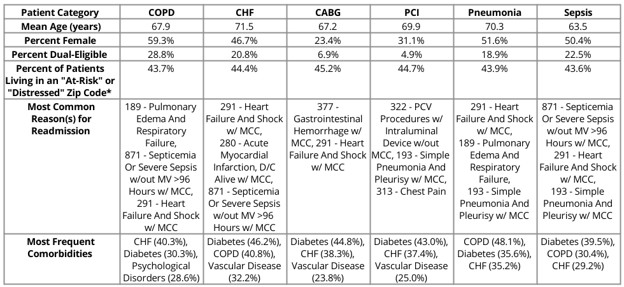
The report began with a summary of patient population characteristics (Figure 1), comparing demographics, risk factors, readmission diagnoses, and comorbidities across each eligible cohort. The table was provided to help hospitals better understand the patient populations underlying the reporting for these six conditions/procedures.

Figure 1. Sample Blinded Table for a Hospital’s Patient Population Snapshot, Common Reasons for Readmission, and Frequent Comorbidities

Comparison table summarizes demographics, risk factors, readmission diagnoses, and comorbidities across COPD, CHF, CABG, PCI, pneumonia, and sepsis patient categories. Mean age ranges from 63.5 years for sepsis to 71.5 for CHF; frequent readmission reasons include respiratory failure, heart failure or shock, gastrointestinal hemorrhage, myocardial infarction, and septicemia, while common comorbidities include CHF, diabetes, COPD, and chronic kidney disease.

The remainder of the report was comprised of condition-specific pages. MVC provided benchmarking figures for average 30-day risk-adjusted, price-standardized total episode payment and 30-day inpatient readmission rate for each condition. MVC price standardized total episode payments to Medicare FFS amounts so that comparisons could be made across hospitals and over time. Payments were risk-adjusted for patient age, gender, payer, comorbidities, and high or low prior healthcare utilization/payments. These figures showcased a given hospital’s position relative to all other eligible MVC hospitals in the collaborative and provided the average total episode payment within a hospital’s region and statewide.

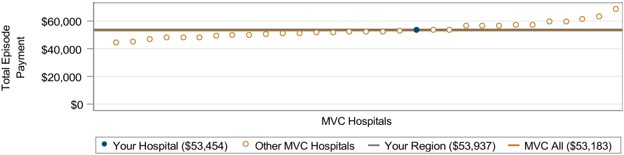
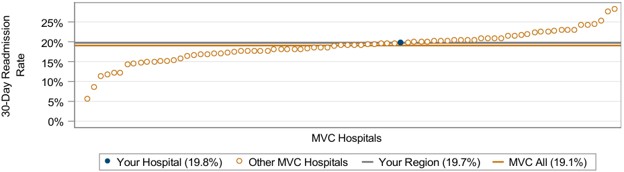
Across the collaborative, CABG had the highest average total episode payment at $53,183 (Figure 2), followed by sepsis and CHF. The collaborative-wide average total episode payment for all conditions did not vary significantly between the 2025 report and the 2026 report. Readmissions were observed to be highest across the collaborative at 19.1% for patients hospitalized for CHF (Figure 3), followed by patients hospitalized for sepsis or COPD. Readmission rates were lowest across the collaborative at 5.4% among patients who underwent a PCI procedure.

Figure 2. Average 30-Day Risk-Adjusted, Price-Standardized Total Episode Payment Among Patients Hospitalized for CABG (Blinded Report)

Caterpillar plot compares average 30-day risk-adjusted, price-standardized total episode payments for CABG patients across MVC hospitals. Orange circles show other hospitals trending upward from about $45,000 to $70,000, while markers identify Your Hospital at $53,454, Your Region at $53,937, and MVC All at $53,183.

Figure 3. 30-Day Readmission Rate Among Patients Hospitalized for CHF (Blinded Report)

Caterpillar plot compares 30-day CHF readmission rates across MVC hospitals, with orange open circles rising from about 6% to 28%. Blue marker shows Your Hospital at 19.8%, while horizontal reference lines mark Your Region at 19.7% and MVC All at 19.1%.

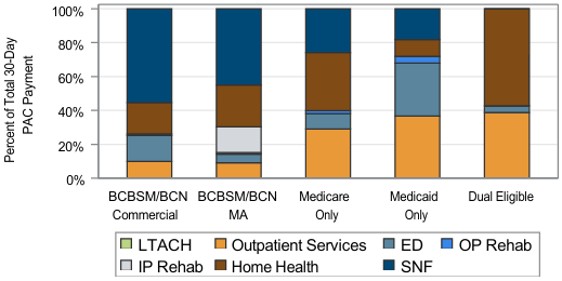
The final figures on the condition-specific pages worked in tandem to display the utilization and cost components that made up a hospital’s average price-standardized, risk-adjusted post-acute care (PAC) payments in the 30 days following discharge. Most hospitals received a figure displaying the breakdown of 30-day risk-adjusted, price-standardized post-acute care payments by payer categories (Figure 4). All payer categories with at least 11 episodes during the reporting period were reflected, including a “Dual-Eligible” category representing patients eligible for both Medicare and Medicaid coverage; as such, Medicare and Medicaid categories did not include dual-eligible patients when that category was included. The post-acute care categories for both figures included home health care, skilled nursing facility (SNF) care, inpatient rehab, outpatient rehab, emergency department (ED) care, long-term acute care hospitals (LTACH), and outpatient services.

Figure 4. Breakdown by Payer of 30-Day Risk-Adjusted, Price-Standardized Total Post-Acute Care Payments Among Patients Who Had a CABG Procedure (Blinded Report)

Stacked bar chart compares payer-specific shares of risk-adjusted, price-standardized 30-day post-acute care payments following CABG. Seven color-coded services show SNF dominating Commercial and Medicare Advantage payments, outpatient services prominent for Medicare Only, Medicaid Only, and Dual Eligible groups, and Home Health comprising most Dual Eligible payments.

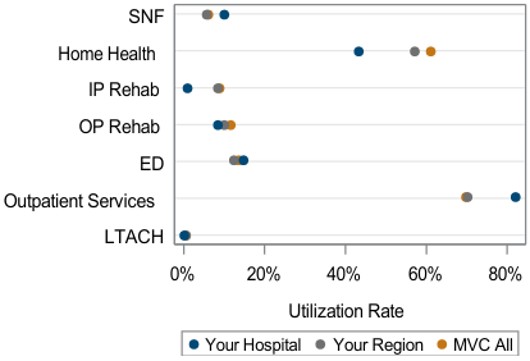
Beyond offering insights into payments by payer and post-acute care category, this figure can offer additional insights and context when considered alongside Figure 5 showing post-acute care utilization rates. The two figures together served to provide a clearer understanding of the relationship between rates of utilization and percent of episode spending for each post-acute care category, illustrating whether spending aligns with utilization frequency. For example, payment categories with a high percentage of post-acute care payment in Figure 4 and a low overall utilization rate in Figure 5 may be indicative of low volume, high-cost outliers within a given condition at that hospital.

Figure 5. 30-Day Post-Acute Care Utilization Among Patients who had a CABG Procedure (Blinded Report)

Dot plot compares 30-day post-acute care utilization after CABG across SNF, Home Health, IP Rehab, OP Rehab, ED, Outpatient Services, and LTACH. Blue, gray, and orange markers represent Your Hospital, Your Region, and MVC All; Outpatient Services shows highest utilization, while LTACH and IP Rehab remain near 0%.

MVC is dedicated to regularly updating its commons conditions report, aiming to equip collaborative partners with insightful data that can drive and reinforce meaningful advancements in healthcare quality. Please contact MVC with any questions or related analytic requests. If you require any digital accessibility accommodation, please let us know and we will be happy to provide alternative formats.

Off
View Post
MVC Push Report Benchmarks Cardiac Rehab Enrollment, Adherence, and Completion Rates

MVC Push Report Benchmarks Cardiac Rehab Enrollment, Adherence, and Completion Rates

Since 2019, the MVC Coordinating Center has emphasized the value and importance of cardiac rehab with its member hospitals, offering claims-based data reporting, workgroup presentations by experts and peers, incentive-based metrics, and other resources to drive improvement. MVC distributed refreshed cardiac rehab push reports this month that continued to benchmark utilization among MVC member hospitals—reports that complement the multi-payer registry pages by incorporating adherence and completion metrics not available on the registry.

The primary motivator behind this work is the ever-growing cohort of patients with cardiovascular disease. Every year in the US, for example, nearly 6.7 million adults manage congestive heart failure (CHF) and more than one million patients undergo cardiac surgical procedures. Cardiac rehab can help patients regain strength and confidence, manage their cardiovascular health, and return to a healthier, more active life. It also has a dose-response relationship—attending more cardiac rehab sessions is associated with lower mortality and morbidity.

The evidence of benefit is clear in the literature, and patient stories affirm its impact and benefit.

“In a sense, the initial heart surgery saved my life the first time, but cardiac rehab saved it a second time,” shared John, a former cardiac rehab participant. “The rehab people performed a small miracle by restoring my self-confidence.”

Another patient, Belinda, shared that her cardiac rehab care at Henry Ford Hospital in Detroit helped her to improve across a variety of health behaviors. “They are so supportive… it encourages you to be faithful in every area with your medication, the exercise. And plus, it helps to elevate your attitude too. It makes you just feel better; it makes you feel more alive… and then you do have something to look forward to.”

Patients like John and Belinda have continued to inspire the MVC Coordinating Center to continually support quality improvement in cardiac rehab utilization. With its latest push report, MVC continued to focus on eligible patients treated for heart attack (AMI), percutaneous coronary intervention (PCI), heart valve repair or replacement (SAVR or TAVR), or coronary artery bypass grafting (CABG), collectively referred to as the “Main 5,” as well as patients with CHF.

The report included MVC 90-day and 365-day episodes of care for adult patients with index cardiac care encounters for Main 5 or CHF conditions. MVC included all its available payer claims between Jan. 1, 2022, and March 31, 2025 (through Sept. 30, 2024 for Medicare). The report provided hospitals with benchmarking data, allowing comparisons in cardiac rehab performance with other eligible MVC hospitals across the state.

Each eligible hospital’s report included a dedicated page highlighting cardiac rehab rates across different patient populations (Figure 1). This table provided an opportunity to examine variation in cardiac rehab participation by race, insurance payer, and Distressed Community Index (DCI) categories to help hospitals better understand which patient populations were experiencing utilization gaps and may benefit from additional support.

Figure 1. Sample Blinded Table Describing Hospital’s Cardiac Rehab Rates Among Different Patient Populations

Two stacked benchmark scatter charts compare MVC hospitals’ CHF care adherence and completion rates within 365 days after discharge. Teal lines mark collaborative averages of 68% and 24%, hollow blue circles show other hospitals, and red dots mark your hospital at 58% adherence and 17% completion, while peer rates generally rise across both charts.

Following the patient population snapshot, MVC also provided benchmarking figures for the Main 5 and CHF patient cohorts, allowing hospitals to compare their cardiac rehab enrollment rates with those of other eligible MVC hospitals. For the Main 5 conditions, the collaborative-wide average 90-day enrollment rate during the reporting period was 34%, below the statewide goal of 40%. Hospital-level enrollment rates ranged from nearly 0% to nearly 60% (Figure 2). For CHF, the collaborative-wide average 365-day enrollment rate was 6%, also below the statewide goal of 10%, with hospital-level rates ranging from 0% to 16% (Figure 3).

Figure 2. 90-Day Cardiac Rehab Enrollment Rate After Discharge from Main 5 Cardiac Care Encounter (Blinded Report)

Line chart compares enrollment rates within 90 days after discharge from five cardiac care encounters across MVC hospitals. Hollow blue circles show other hospitals, black line marks statewide goal at 40%, teal line marks collaborative average at 34%, and red marker identifies your hospital at 44%, with rates generally rising from near 0% to 55%.

Figure 3. 365-Day Cardiac Rehab Enrollment Rate After Discharge from CHF Cardiac Care Encounter (Blinded Report)

Scatter plot shows CR enrollment rate within 365 days after discharge for CHF cardiac care encounters across MVC hospitals. Hollow blue circles rise from near 0% to 16%, teal line marks collaborative average at 6%, black line marks statewide goal at 10%, and red marker identifies Your Hospital at 10%.

In addition to traditional reporting of enrollment rates, MVC incorporated two new measures in the report—adherence and completion—to provide a more comprehensive view of patients’ engagement with cardiac rehab over time. Adherence is an AACVPR performance measure defined as the percentage of enrolled patients who completed at least 12 cardiac rehab sessions within 365 days of the index cardiac care encounter. Completion was defined as the percentage of enrolled patients who completed at least 36 sessions within 365 days of the index cardiac care encounter. Together, these measures provided insight into whether patients continued participating in cardiac rehab after their initial enrollment.

During the reporting period, the statewide average among Main 5 patients was 75% for adherence, meaning that three in four patients completed at least 12 sessions (Figure 4). The statewide average completion rate was 24%, meaning that nearly one in four enrolled Main 5 patients completed at least 36 sessions. Among patients with CHF, 68% completed at least 12 sessions, while 24% completed at least 36 sessions (Figure 5).

Figure 4. Cardiac Rehab Adherence and Completion Rates Within 365 Days After Discharge from Main 5 Cardiac Care Encounters (Blinded Report)

Two-panel dot chart compares MVC hospitals’ cardiac rehabilitation adherence and completion rates within 365 days after discharge from a main five cardiac care encounter. Open circles show other hospitals, blue lines mark collaborative averages of 75% adherence and 24% completion, and red markers show Your Hospital at 77% and 27%, with rates generally increasing across hospitals.

Figure 5. Cardiac Rehab Adherence and Completion Rates Within 365 Days After Discharge from CHF Cardiac Care Encounter (Blinded Report)

Two stacked benchmark scatter charts compare MVC hospitals’ CHF care adherence and completion rates within 365 days after discharge. Teal lines mark collaborative averages of 68% and 24%, hollow blue circles show other hospitals, and red dots mark your hospital at 58% adherence and 17% completion, while peer rates generally rise across both charts.

For hospitals with insufficient case counts, some figures and tables were omitted from the report. Hospitals interested in exploring their cardiac rehab enrollment data further can use the MVC Registry to analyze their hospital’s enrollment rates over time, average number of sessions completed within 90 days, and average time to enrollment (mean days to cardiac rehab). Hospitals interested in examining their cardiac rehab data beyond the information included in the report and the registry can reach out to MVC to request a custom report.

In addition to providing data on cardiac rehab, the MVC Coordinating Center offers a cardiac rehab workgroup where members and partners share strategies and insights to help improve performance. The next workgroup will take place on Tues., Oct. 20, from 12-1 p.m., focused on the content and applications of this push report. More information about upcoming MVC events can be found on the MVC events page.

MVC is a contributing partner of the Michigan Cardiac Rehab Network (MiCR), which is co-led by MVC and the Blue Cross Blue Shield of Michigan Cardiovascular Consortium (BMC2). MiCR aims to increase statewide 90-day cardiac rehab enrollment rates to 40% among Main 5 patients, and 365-day cardiac rehab rates to 10% among eligible CHF patients. To learn more about MiCR and its resources visit https://michigancr.org/.

Off
View Post
Hospitals Receive PY 2026 Mid-Year Scorecards for MVC Component of BCBSM P4P Program

Hospitals Receive PY 2026 Mid-Year Scorecards for MVC Component of BCBSM P4P Program

Earlier this month the Michigan Value Collaborative (MVC) distributed mid-year scorecards for Program Year (PY) 2026 of the MVC Component of the Blue Cross Blue Shield of Michigan (BCBSM) Pay-for-Performance (P4P) Program. PY 2026 marks the first year of the two-year (PY 26-27) P4P cycle, and includes Medicaid claims as well as the newly introduced health outcome variation measure in the scoring. This report provided hospitals with their current standing for PY 2026.

Each participating hospital received a mid-year score out of a total of 10 points, including 0 to 3 points for their selected total episode payment metric, 0 to 4 points for their selected value metric, 0 to 1 point for health outcome variation measure and 0 to 2 points for completed eligible engagement activities. PY 2026 scores achievement and improvement points for each metric using index admissions from 2025 performance year data against admissions in 2023 as the baseline year. Hospitals are awarded the higher of their achievement and improvement point scores.

The performance data timeframes included in mid-year PY 2026 scoring were index events 1/1/2025 – 12/31/2025 for BCBSM PPO Commercial, BCBSM Medicare Advantage (MA), BCN HMO Commercial, BCN HMO MA, Medicaid and index events from 1/1/2025 – 6/30/2025 for Medicare FFS. For the health outcome measure, the performance data included were index events from 1/1/1015 – 6/30/2025 to reflect the most recent date range for all payers. The engagement points accrued represent all completed activities from 1/1/2026 – 9/2/2026. All scores are subject to change in the final scorecards as the remaining 2025 performance data becomes available and additional 2026 P4P engagement activities are completed and recorded for this year.

Figure 1 illustrates the current distribution of total points out of 10 across the collaborative. The average points scored across the mid-year scorecards was 5.2 out of 10 and ranged between 0.5 and 10 points. This average is 1.5 points lower than the average points scored at the conclusion of PY 2025.

Figure 1. PY26 Mid-Year Distribution of Total Points Out of 10 Across the Collaborative

Dot plot ranks MVC Hospitals participating in PY26–27 P4P Program by PY26 mid-year score, with scores ranging from roughly 0.5 to 10. Blue hospital markers rise steadily across rankings, while an orange horizontal line marks mean and median at 5.2.

Figure 2 illustrates the breakdown of scoring on average by each program component (i.e., episode spending metric, value metric, health outcome variation measure and engagement points). Hospitals could earn up to three points for their episode spending, four points for their value metric selections, one point for health outcome variation measure and up to two points for engagement activities completed in 2026. Across collaborative, the average points scored for episode spending and value metrics were 1.0 point, and 2.2 points respectively. For the newly introduced health outcome variation measure, the average was 0.6 points and the average for engagement activities was 1.4 points.

Figure 2. PY26 Mid-Year Scoring on Average by Each Program Component

Bar chart showing average points scored across hospitals by category, with y-axis ranging 0–10 points. Blue bars show Episode Spending 1.0/3, Value Metrics 2.2/4, Health Outcome Variation 0.6/1, Engagement 1.4/2, and Total Points 5.2/10.

Figure 3 illustrates the breakdown of the average points by episode spending conditions. Coronary Artery Bypass Grafting (CABG) and Congestive Heart Failure (CHF) were both the highest scoring episode spending conditions with an average of 1.3 points, and this was followed by chronic obstructive pulmonary disease (COPD) with 1 point. The lowest scoring episode spending condition was pneumonia with hospitals earning 0.4 points on average.

Figure 3. PY26 Mid-Year Average Points by Episode Spending Conditions

Bar chart compares average points scored across episode spending conditions: CABG 1.3, CHF 1.3, COPD 1.0, and PCI 0.4. Blue patterned bars use a 0–3 vertical scale, with mean and median both marked as 1.0.

Figure 4 illustrates the breakdown of average points by value metrics. Consistent with PY 2025, the highest scoring value metric was preoperative testing with 3.5 points, followed by 90-day cardiac rehabilitation after CABG with 3.0 points. All follow up metrics had an average score of below 2 points with the lowest scoring value metric being 14-day follow up after COPD with 1.1 points.

Figure 4. PY26 Mid-Year Average Points by Value Metrics

Bar chart compares average points scored across value metrics for preoperative testing and follow-up categories. Dark blue bars decline from 3.5 for preoperative testing to 1.1 for 14-day follow-up after COPD, with mean 2.2 and median 2.0 marked at upper right.

These PY 2026 P4P mid-year scores are subject to change as new data is added. The final scores will be distributed after all 2025 claims are incorporated into the calculations. The full methodology for this program cycle can be found in the PY2026-2027 technical document. Hospitals can also track their score via the P4P PY 2026-2027 dashboard reports on the MVC registry, which provides all relevant scoring information for both improvement and achievement points. These registry reports can be filtered by selected conditions/metrics to make tracking of P4P points easier. You can also contact the MVC Coordinating Center by email for a walkthrough of your hospital’s PY 2026 mid-year scorecard or P4P registry reports.

Off

The Michigan Value Collaborative’s Refreshed Cardiac Service Line Reports

The Michigan Value Collaborative (MVC) Coordinating Center disseminated it’s long-running customized cardiac service line report to hospital and physician organization (PO) members on February 23, 2021. These reports provide hospital-level information on congestive heart failure (CHF), acute myocardial infarction (AMI), and coronary artery bypass graft (CABG) conditions. To receive information on any one of these conditions, a hospital must have at least 20 cases per year over the three-year reporting period (1/1/17 – 12/31/19).

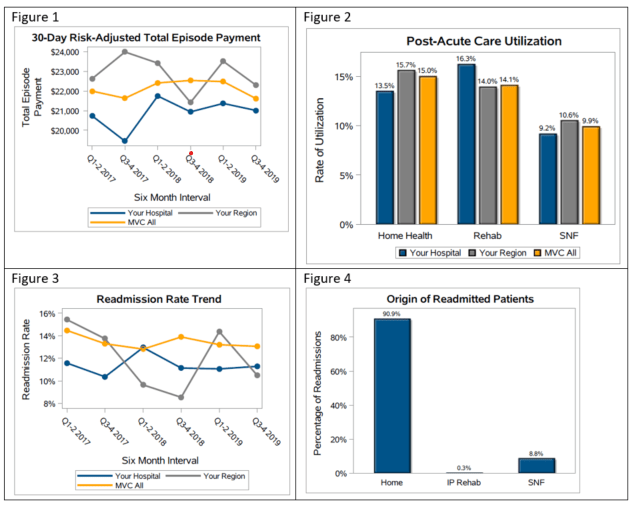
Since the last iteration of the cardiac service line report sent in June 2020, the Coordinating Center has defined four distinct regions within Michigan, allowing members to make regional comparisons. These comparisons have been incorporated into the 30-day risk-adjusted total episode payment trend chart, the post-acute care utilization bar graph, and the 30-day readmission rate trend chart of the reports as shown in the following AMI figures for a fictional institution, Hospital A.

Acute Myocardial Infarction Figures. Hospital A

Figure 1 shows the 30-day risk-adjusted total episode payments broken up into six-month intervals, illustrating that episode payments for AMI hold steady across the Collaborative at an average of around $22,000. Please note that as with all MVC reports, this represents price standardized dollars to allow for fair comparisons between hospitals. The price standardized dollars can be thought of as a measure of utilization as opposed to true dollar amounts.

Figure 2 displays the percentage of AMI patients who utilized home health (15.0% across MVC), rehab (14.1% across MVC), or skilled nursing facilities (9.9% across MVC). Figure 3 illustrates that, between 2017 and 2019, approximately 14% of AMI patients were readmitted within 30 days. Finally, Figure 4 shows Hospital A that based on the most recent claim before a readmission occurred, 90.9% of readmitted patients were coming from home, 8.8% were coming from Skilled Nursing Facilities (SNF), and very few were coming from inpatient rehabilitation (0.3%). Hospitals can use this information to observe if they are an outlier in any of the categories and where they may have an opportunity to improve, to benchmark themselves against the MVC all and regional averages, and to notice trends in their performance

These combined-payer push reports are distributed twice a year, meaning the next iteration is likely to be sent out in the summer of 2021. In the meantime, single-payer information is always available on the MVC registry, allowing for continued monitoring of these metrics. Data is added every month for Blue Cross payers and quarterly for Medicare. Michigan Medicaid data will be live on the registry at the start of Q2 this year.

If you need registry access, if you have ideas on how these reports can be made more versatile, or if you are using these data for a quality improvement project at your institution, please contact michiganvaluecollaborative@gmail.com. Additionally, please reach out if you want further information in the way of custom analytics.