Off
View Post
MVC’s Latest CDM Push Report Reframes Focus to Follow-Up Care

MVC’s Latest CDM Push Report Reframes Focus to Follow-Up Care

The Michigan Value Collaborative (MVC) distributed its chronic disease management (CDM) push report recently, which has been refreshed and reframed from its previous iterations. Originally termed the CDM congestive heart failure (CHF) report and the CDM chronic obstructive pulmonary disease (COPD) report, the new “CDM follow-up report” focuses more specifically on follow-up care after hospitalization for the two conditions.

The newest version aims to provide additional granularity into follow-up care at member hospitals by showcasing variability across different windows of time, across payers, and by type. MVC defines follow-up as episodes where a patient had an outpatient follow-up visit (in person or by telehealth) within 30 days or before a readmission, inpatient procedure, emergency department visit, skilled nursing facility admission, or visit for inpatient rehabilitation.

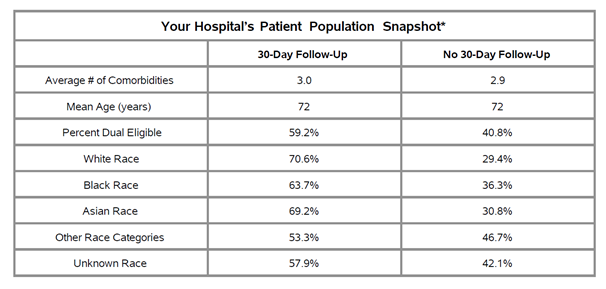
The report features a new patient population snapshot table that highlights demographic data. These tables (see Figure 1) provide each hospital with demographics for their CHF/COPD patient populations, including race, mean age, the average number of comorbidities, and the proportion of patients who are dual-eligible.

Figure 1.
MVC hospitals will see comparisons to their peers on 7-day, 14-day, and 30-day outpatient follow-up rates, as well as 30-day risk-adjusted total episode payments and 30-day outpatient follow-up rates stratified by payer. Members will also see their individual hospital’s breakdown of follow-up types at 30 days, and trends over six months for 3-, 7- and 14-day rates.

Each figure presented reflects index admissions from 1/1/18 – 12/31/20 for Blue Cross Blue Shield of Michigan (BCBSM) PPO Commercial, Blue Care Network (BCN) Commercial, BCBSM PPO Medicare Advantage, BCN Medicare Advantage, Medicare Fee-For-Service, and Medicaid. Hospitals received report pages for each condition if they met the threshold of at least 11 episodes in each year of data for that condition.

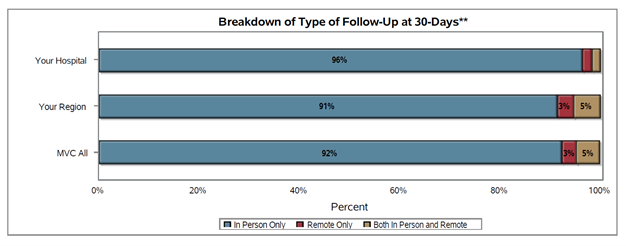
There was wide variation in follow-up rates across the collaborative, with member follow-up rates ranging from less than 40% after 30 days to approximately 80% (see Figure 2). In addition, 30-day follow-up rates were lowest within the Medicaid patient population with an MVC average of 58% (see Figure 3); the collaborative-wide averages for 30-day follow-up among BCBSM/BCN and Medicare patients were 76% and 73%, respectively. It was also the case that most patients (92% on average) received follow-up care in person as opposed to a remote or hybrid option (see Figure 4).

Figure 2.
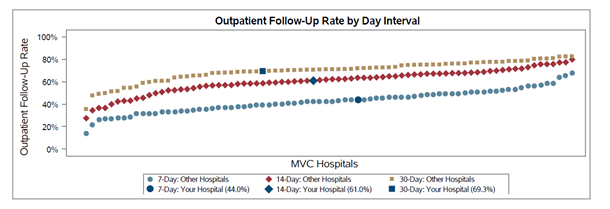
Figure 3.
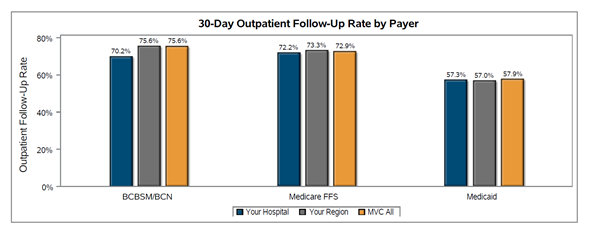
Figure 4.
The CDM follow-up report was distributed in partnership with the Integrated Michigan Patient-Centered Alliance in Care Transitions (I-MPACT) Collaborative Quality Initiative (CQI). I-MPACT is a unique patient-centered, data-driven collaborative that engages hospitals and provider organizations throughout Michigan in developing and implementing innovative approaches for improving care transitions. They work to improve the transition of patients between care settings with the goal of bettering outcomes and reducing readmissions.

In addition to partnering with I-MPACT to expand the report’s reach, MVC also partnered with a CQI to provide members with supplemental materials that may be relevant to their work with CHF/COPD patients. The Healthy Behavior Optimization for Michigan (HBOM) CQI provided tobacco cessation materials that were shared alongside the MVC report, including a Quit Smoking Resource Guide and Quit Smoking Medication Guide. HBOM aims to ensure that all smokers who are interested in quitting receive the support and resources they need to be successful. Read more about HBOM’s materials and efforts in MVC’s May CQI spotlight blog.

In addition to continuing to offer its CDM push report, the MVC Coordinating Center offers a bimonthly CDM workgroup. The next workgroup will take place on Tuesday, July 12 from 1-2 p.m., and will feature a presentation about the Sparrow Pain Management Center’s Care Management Program. Please register today to join the MVC Coordinating Center for this presentation and discussion.

If you have any suggestions on how these reports can be improved or the data made more actionable, the Coordinating Center would love to hear from you. MVC is also seeking feedback on how collaborative members are using this information in their quality improvement projects. Please reach out at michiganvaluecollaborative@gmail.com.

3
View Post
Unique Food Assistance Program Bridges Medical and Food Sectors

Unique Food Assistance Program Bridges Medical and Food Sectors

MVC hosted another successful session of its new health equity workgroup last week with a guest presentation by Ariane Donnelly, MPH, RD, Health Promotion Coordinator at the Washtenaw County Health Department. The new health equity workgroup was established in response to a greater strategic focus on health equity within the MVC Coordinating Center as well as widespread interest in this topic within the healthcare field.

The March 16 workgroup focused on the Prescription for Health program, which takes a unique approach to chronic disease management by connecting the medical system with the food sector. It operates by having participating healthcare providers assign “prescriptions” to their patients to eat more fruits and vegetables. These prescriptions can then be “filled” at local participating farmers markets, where patients receive $100 in tokens to spend on fresh fruits and vegetables as well as nutrition education and support. Participants also work with Community Health Workers to set health goals. The program leverages the fact that Michigan is the second most agriculturally diverse state in the country, and its abundant farmers markets can be an asset in supporting healthy lifestyles for patients.

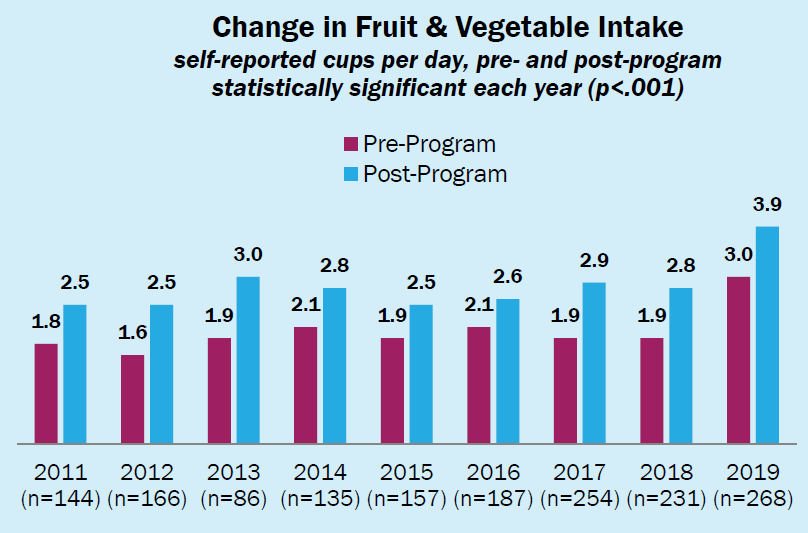
Evaluation of the program’s effectiveness has been fruitful. For every year of the program, the health department found a statistically significant increase in self-reported fruit and vegetable intake, often by one cup or serving per day (see Figure 1).

Figure 1.

The program was first created in 2008 in response to high levels of food insecurity within communities in Washtenaw County combined with generally low consumption of fruits and vegetables, both of which are associated with an increased risk of chronic disease. Ms. Donnelly pointed out that while many clinics provide nutrition advice, patients face multiple barriers to equitably accessing healthy foods and need additional support. Since its first pilot, the program has continued to grow in total enrollees and economic impact, and it maintained its participation levels throughout the pandemic with a modified version of the program.

Similar programs are in operation in other parts of the state and country as well, such as Food Rx in Chicago and Fresh Prescription in Detroit. Washtenaw County’s Prescription for Health program launched an implementation toolkit in 2016 to help others with starting a similar program in their area.

To learn more about the Prescription for Health program’s operations, impact, and lessons learned, watch the full recording of the workgroup here: https://bit.ly/3IyIsnS. You can also visit the program website for more information: www.washtenaw.org/prescriptionforhealth.

MVC will continue to invite guest speakers with valuable insights on a more equitable health system. The next MVC health equity workgroup will take place on Tuesday, May 10, from 1-2 p.m. If you would like to suggest a topic or speaker for a future workgroup, please contact the MVC Coordinating Center at michiganvaluecollaborative@gmail.com.
Prescription for Health is funded by Saint Joseph Mercy Health System with additional financial support from multiple partners.

Off

Special Consideration Needed for Older Patients Using Telecare

When most people think about healthcare, the images that come to mind include a trip to their local provider’s office, lab, or hospital for services such as physicals, blood tests, and procedures. However, medical professionals and their patients are increasingly transitioning to more remote services that leverage our advances in communication technologies, resulting in the burgeoning “tele” world of healthcare. But are these services reaching everyone?

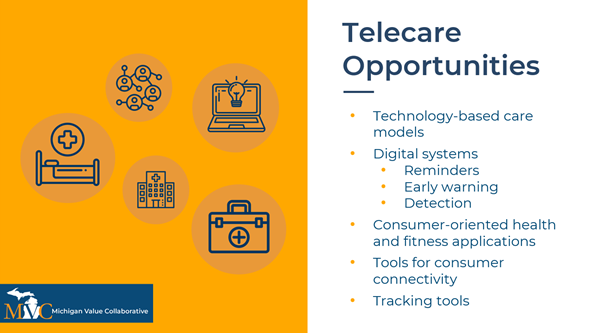
Telemedicine, telehealth, and telecare are three examples of remote, interactive services that allow patients to receive healthcare from within their own homes. Although these terms are often used interchangeably, they in fact refer to different aspects of healthcare delivery. Telemedicine applies to physicians who use technology to support the delivery of medical, diagnostic, or treatment-related services. Telehealth is like telemedicine but applies to a broader collection of providers, such as nurses or pharmacists. Telecare (see Figure 1) is generally more consumer-oriented by providing the patient with technology to manage their own care safely from home, such as health apps or digital monitoring devices.

Figure 1. Telecare Slide from MVC Workgroup Presentation

The adoption of “tele” services saw incredible growth in 2020 in response to the pandemic. A report found that Medicare telehealth visits increased 63-fold recently, from 840,000 in 2019 to 52.7 million visits in 2020. However, now that adoption of these services (and the platforms needed to host them) are more commonplace, providers are asking whether it benefits their most vulnerable patients and who may be left behind.

These questions drove the discussion of the most recent MVC workgroup on chronic disease management. Over the course of the session, attendees were particularly interested in how telecare improves elderly care, and whether patients over the age of 65 could adequately access such services. For those older adults utilizing telecare, evidence from the ongoing COVID-19 pandemic identified convenience and affordability as telecare’s primary strengths. In addition, research evidence suggests that the two most effective telecare interventions in this population are automated vital sign monitoring and telephone follow-up by nurses.

Some of the challenges often cited for this population include lack of appropriate internet access or devices, limited digital literacy, medical conditions that may impede participation (i.e., hearing or vision impairments, dementia, etc.), and the need to regularly monitor vitals in very high-risk patients. Although the authors compiling these challenges specifically reference older adults, they could just as easily apply to people experiencing poverty, people with disabilities, and people with more limited language and literacy skills.

Some recommended strategies to address common challenges include tablet delivery services, “mobile medical assistants” who perform video set-up for the patient, assistance from an on-site caregiver, practice or “mock” video visits prior to the appointment date, partnerships with community health workers to support or train patients in their homes, and providing self-monitoring devices. Other simple considerations include the size of the text displayed on the page (use larger text to enhance readability), providing adequate instructions in advance and in multiple languages, and engaging experts in user experience design.

In addition to these considerations, some researchers suggest that, in general, the adoption of new technologies can be predicted in part by Everett Rogers’ Diffusion of Innovation Theory. One study incorporating this theory found that the chances of telecare adoption were highest for three types of older adults: those already receiving long-term or nursing care, those living alone, and those who have fixed daily telecare points of contact.

Increased integration of technology in healthcare is inevitable as advancements continue and we shift to a more digital world. Since the number of people in the U.S. who are age 65 or older will more than double over the next 40 years, it is imperative that older adults are not left behind when transitioning to such services. Rather than fear the challenges, researchers and practitioners are seeking ways to find solutions and help all patients benefit from healthcare access within their own homes.

The MVC Coordinating Center encourages its members to collaborative with one another to benefit from peers’ success stories and lessons learned. If your hospital or physician organization has developed an age-friendly telecare protocol, please consider sharing your story with the MVC Coordinating Center at michiganvaluecollaborative@gmail.com. To catch up on the recent MVC workgroup discussion about telecare, watch the chronic disease management workgroup recording here.
Off

The Behavior Change Puzzle of Medication Non-Adherence

Non-adherence to a prescribed medication regime for chronic disease management is known to lead to poor health outcomes and higher healthcare costs. A number of studies have shown that adherence is usually around 50% or less, even when medications are provided free of charge. What seems to be less clear is how best to address poor adherence; one study points out that most of the current interventions meant to improve adherence rates are too complex or ineffective, and that the research in this field is rife with weaknesses and bias.

But as with most quality improvement initiatives, understanding the source of the problem is an important first step. In this case, identifying the reasons for non-adherence is an important starting point for reducing barriers and improving patient outcomes. Many factors may affect whether a person takes their medications, including the patient themselves, the disease being treated, the health system and team, and the type of therapy involved. One study’s survey of 10,000 patients found that the most cited barrier to taking one’s medications was simply forgetfulness (24%). This was followed by perceived side effects (20%), high drug costs (17%), and a perception that their prescribed medication will have very little effect on their disease (14%).

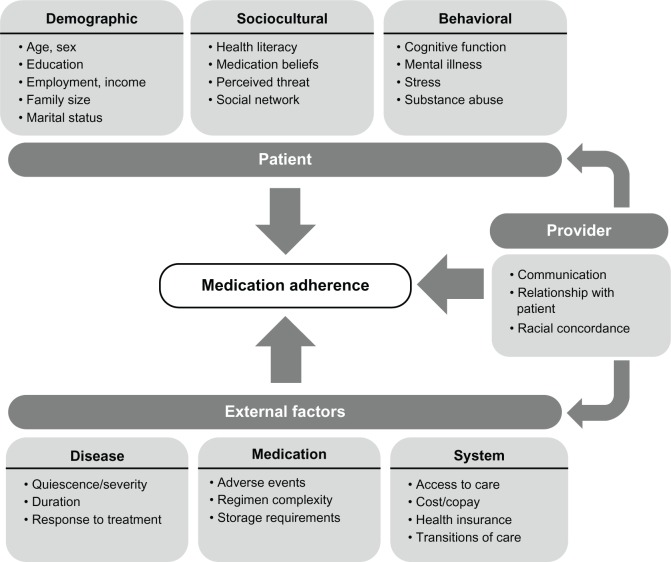
The same study illustrated the various patient, provider, and external factors that can play a role in medication adherence using the figure below (Figure 1). If any one of these factors were to present a challenge for the patient, then they are at risk of not taking their prescribed medications on time and any related medical issues.

Figure 1.

While some interventions such as pill box aids and electronic reminders have helped patients when forgetfulness is the issue, these do not address factors such as concerns about side effects and medication-related harm, or uncertainty about the importance of taking long-term prescribed medications. These issues have the potential to be addressed through shared decision-making and education from clinical experts such as pharmacists and nurses.

One review analyzed the impact that social determinants of health has on medication adherence. Disadvantageous circumstances in social and living conditions are associated with an increase in chronic disease, and it is believed that these same challenges impact a person’s ability to manage their health. When an individual is facing food insecurity, unemployment, and unstable living conditions, they are sometimes unable to address their health concerns emotionally or financially. The review found that medication adherence was negatively impacted by food insecurity and housing instability, although few studies identified other specific social determinants that influence non-adherence to medications beyond these two. In fact, education, income, and employment status did not significantly correlate with adherence to a medication regime.

The Michigan Value Collaborative (MVC) would like to hear how your institution is addressing medication non-adherence, especially in the chronic disease patient population. This will be an upcoming topic at a chronic disease management workgroup. Please contact MVC at michiganvaluecollaborative@gmail.com for information about attending.

1

Monitoring Chronic Disease Utilizing Social Media and Sensors

According to the Centers for Disease Control and Prevention, “treating individuals with chronic diseases accounts for 86% of health care costs.” While the number of those living with chronic conditions and the associated costs may be increasing, the Michigan Value Collaborative (MVC) is committed to providing you with current data around providing the right care, at the right time, at the right cost. Technological advances in healthcare are changing how and where chronic disease care is being delivered, how these patients interact with providers, and how organizations exchange information.

Both diabetes and abnormal blood pressure (BP) are extremely common in chronic disease patients and cause various complications, including an increased risk of cardiovascular events. When thinking about the way in which these chronic diseases should be managed moving forward after the COVID-19 pandemic, technological advances offer promising solutions.  Most devices in the healthcare industry have been digitalized. This advancement allows for routine monitoring using various devices that some patients may already own, such as a smart phone or a smart watch. These devices contain sensors that can be used to obtain information that can then be transmitted straight into the electronic health record (EHR). Other devices that can be used to collect patient information include a glucometer sensor, pulse oximeters, temperature sensors, scales, and many more. However, this method is not without its limitations.

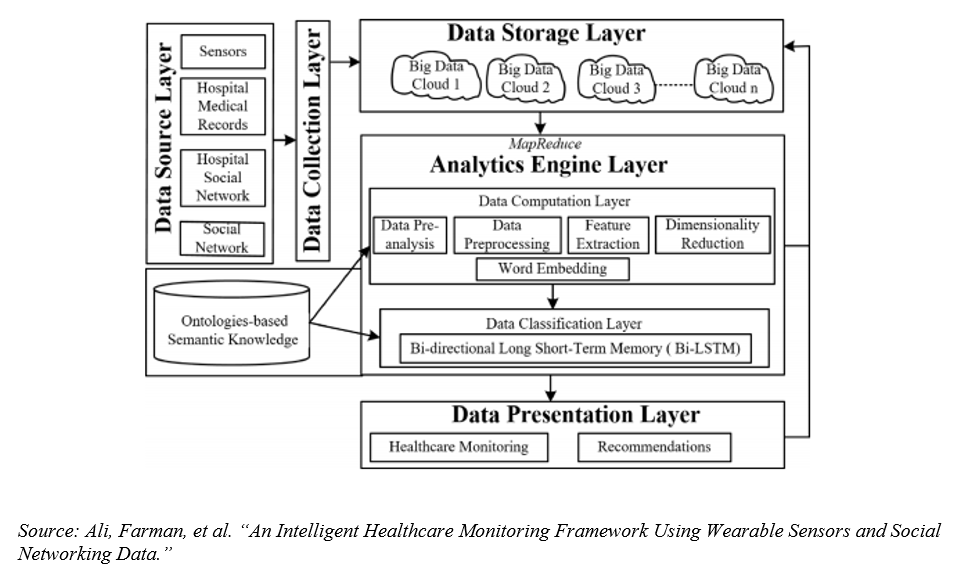
The amount of data that is generated from these devices is vast and not all systems are capable of storing and processing it efficiently for precise and real time monitoring. In order to negate this issue, a framework was recently published that can be seen in Figure 1 below. This framework utilizes the cloud environment along with a large analytics engine layer to help store and process the data. The recently published study identifies the importance of utilizing wearable sensors and social networking platforms in collecting patient data, but identifies the challenges that come with this such as issues with data storage and running correct analyses.

Figure 1. Layers in the proposed healthcare monitoring framework

Chronic disease management patients may use social media platforms in order to seek support or learn new ways in which they may be able to reverse certain symptoms. Other ways in which monitoring is done through social networks include patient and provider conversations through application programming interfaces (APIs). Through these APIs, providers can pick up on tone or social connection status. Through this proposed framework of social media and sensor monitoring, providers can closely monitor chronic disease management patients.

MVC hosts chronic disease management workgroups where collaborative members discuss their current initiatives and connect on ways in which they can work together to better the health of Michigan. If you have any questions about upcoming chronic disease management workgroups, please feel free to contact the coordinating center at michiganvaluecollaborative@gmail.com

Off
View Post
Henry Ford Health System – Cardiac Rehab

Henry Ford Health System – Cardiac Rehab

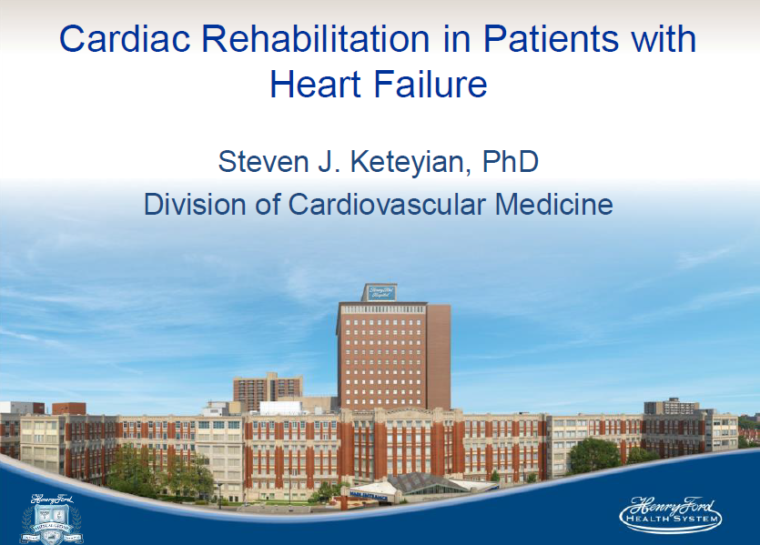
At the most recent congestive heart failure MVC workgroup, Dr. Steven Keteyian, Section Head of the Cardiac Rehabilitation/Preventive Cardiology Unit at Henry Ford Medical Group, presented on exercise-based cardiac rehabilitation in patients with heart failure. Dr. Keteyian started out by discussing the importance of cardiac rehabilitation and adhering to a program in order to improve exercise tolerance and disease-specific outcomes. Exercise intolerance is measured and the information gathered can be used to stratify a patient’s future risk. If the measurement improves over time, Dr. Keteyian discussed the potential for a decrease in risk of death and re-hospitalization. This shows a tie to directly improving outcomes and symptoms in cardiac rehabilitation. Also, in the words of Dr. Keteyian, “functionally, the more they don’t do, the less they can do.”

Cardiac rehab is a Class I recommendation from The American College of Cardiology for all of the traditional cardiac disorders. Henry Ford has a 36-visit program that is anchored on exercise training. Between four and fifteen people are in each class and each person receives an individual treatment plan with a focus on bio-behavioral components. Six core components make up the program which include outcome assessments, supervised exercise, dietary/weight management, tobacco abuse, psychological support, and medication adherence. All participants participate in 30-minute behavioral education sessions which cover topics such as nutrition, dining out, proper exercise, medication compliance, and other relevant disease-management self-care activities. These same topics are also available on YouTube and can be found here, all of which are available for use in your cardiac rehab program. Currently, Henry Ford is working on bringing their time to enrollment after hospital discharge to less than 21 days and increasing adherence to the 36-visit program. The goal is to achieve a participation rate of 70% or more in cardiac rehab for Henry Ford’s patient population.

After discussing the program specifics at Henry Ford, Dr. Keteyian discussed the barriers that one may face in relation to participation in cardiac rehab. These barriers include:

  • Demographic
  • Difficulty contacting patient after hospitalization
  • Return to work demands
  • Transportation
  • Co-payment obligations
  • Dependent care responsibilities

Henry Ford is working at a system level in order to increase the percent of patients who gain access to cardiac rehab. This includes increasing the use of electronic medical record (EMR) driven automatic referrals, with an option for users to opt-out if necessary. Additionally, a member of the cardiac rehab team goes to the inpatient setting and talks to patients to establish a touchpoint before they leave the hospital. This five-minute conversation is all some patients need in order to see the importance and benefits of rehab. Lastly, Henry Ford is working to shorten the discharge to start time. Each day after discharge, the chance of getting patients started in rehab decreases by 1% for each day that passes. Henry Ford is working diligently in order to help decrease this risk.

In 2016, Henry Ford launched a hybrid home-based cardiac rehabilitation service. This includes some visits at the clinic and other virtual sessions. Previously being tied to a single visit at a time on their current streaming platform, Henry Ford will roll out a WebEx model in February 2021 that will allow up to six cardiac rehab appointments to occur at one time. This will provide more of a group setting. Currently, a randomized controlled trial is being done on center based cardiac rehab versus hybrid cardiac rehab. Improvements in fitness and the number of sessions attended are being assessed.

If you are interested in watching the entire workgroup, please click here.  If interested in any information about this workgroup, or other MVC workgroups please email michiganvaluecollaborative@gmail.com